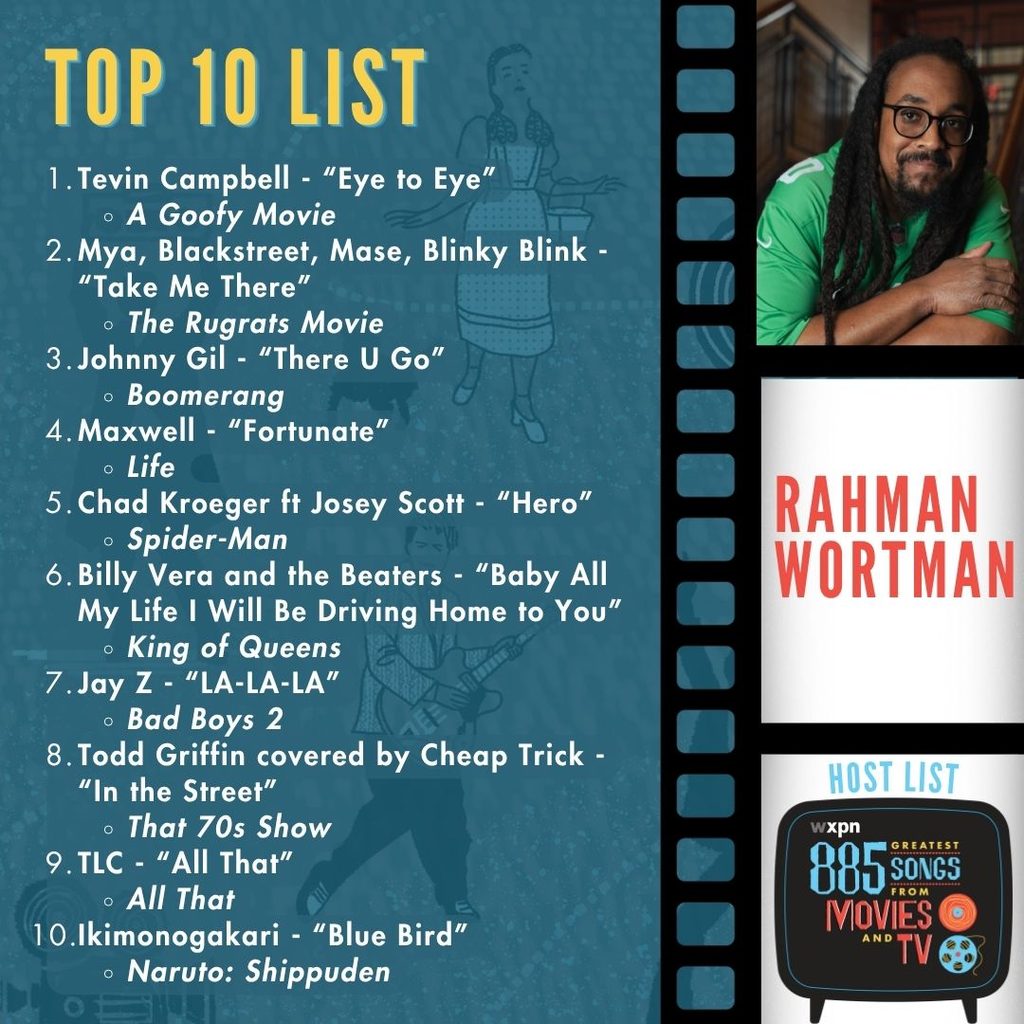
WXPN hosts name their top 10 songs from movies & TV
Still working on your list of the Greatest Songs from Movies & TV? Check out our hosts’ lists to get some inspiration for yours, which you can submit through Oct. 29!
WXPN hosts name their top 10 songs from movies & TV
As you think of songs to include in your list of the Greatest Songs from Movies and TV (submit yours online here), we’re here to share with you what the hosts you know and love chose for their lists.
A common comment we’ve heard from folks who’ve submitted lists is once their list is locked in, they think of a handful of other songs from movies and TV that they could have included.
While we don’t necessarily want these lists to influence your list, we hope they spark a memory of a needle drop you recall fondly or remind you of a song that fits perfectly in a moment on the screen.
So as you peruse these lists, keep in mind how you’ll build out your list, which you can submit through Oct. 29 to help us build The 885 Greatest Songs from Movies & TV for our annual year-end countdown.
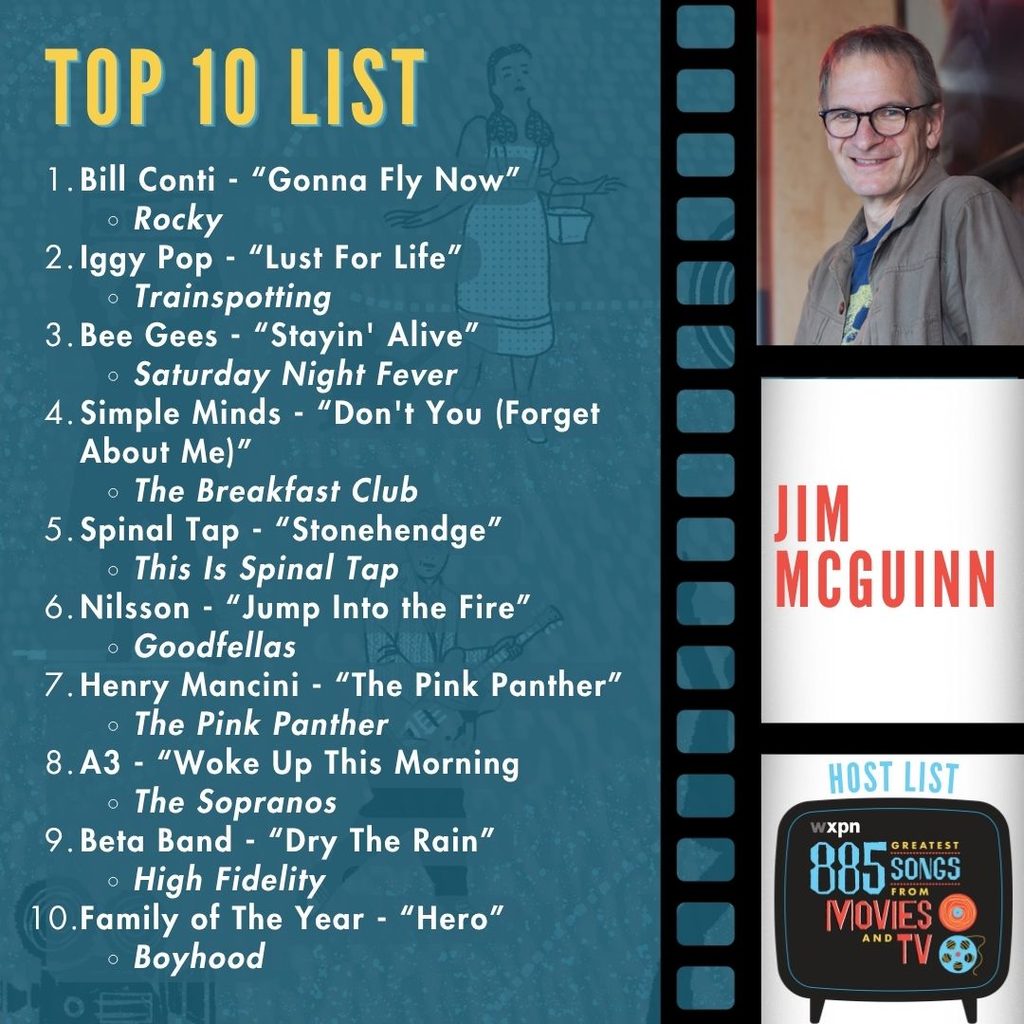
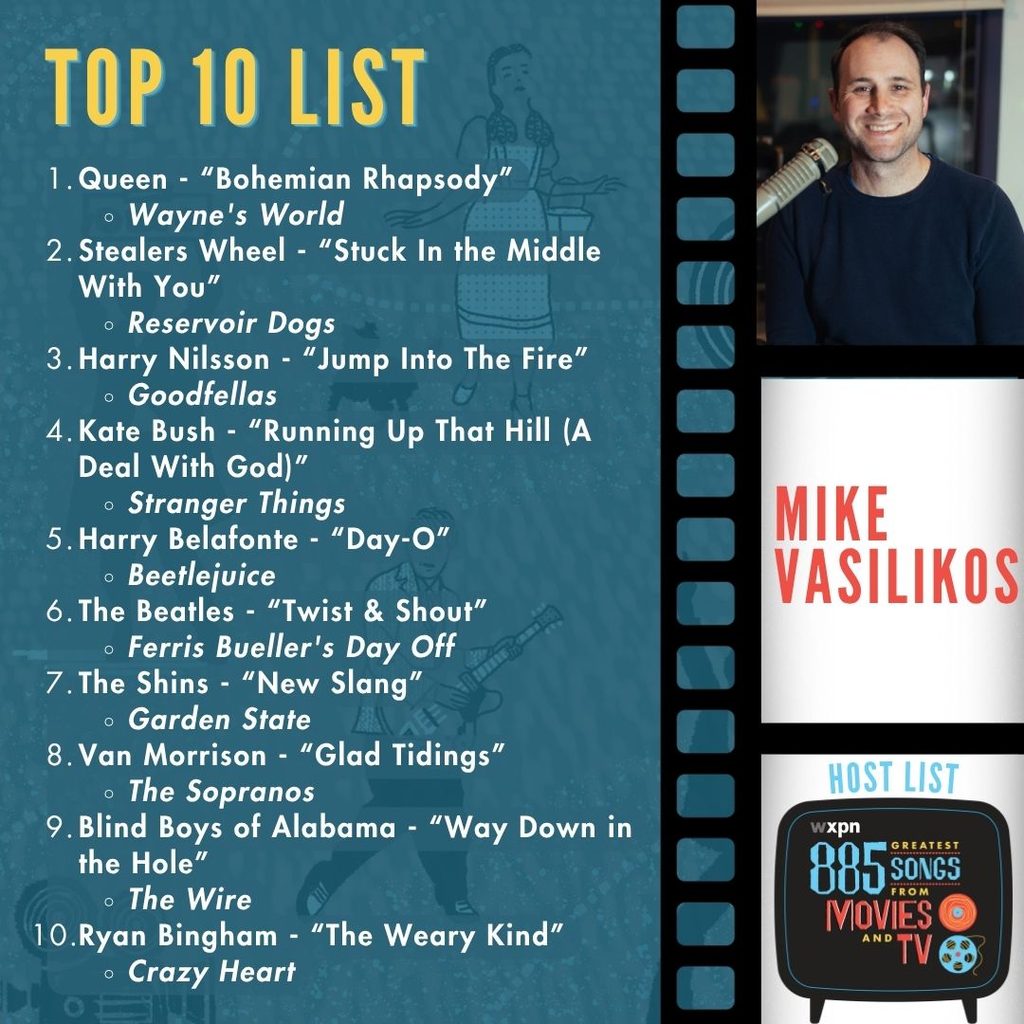
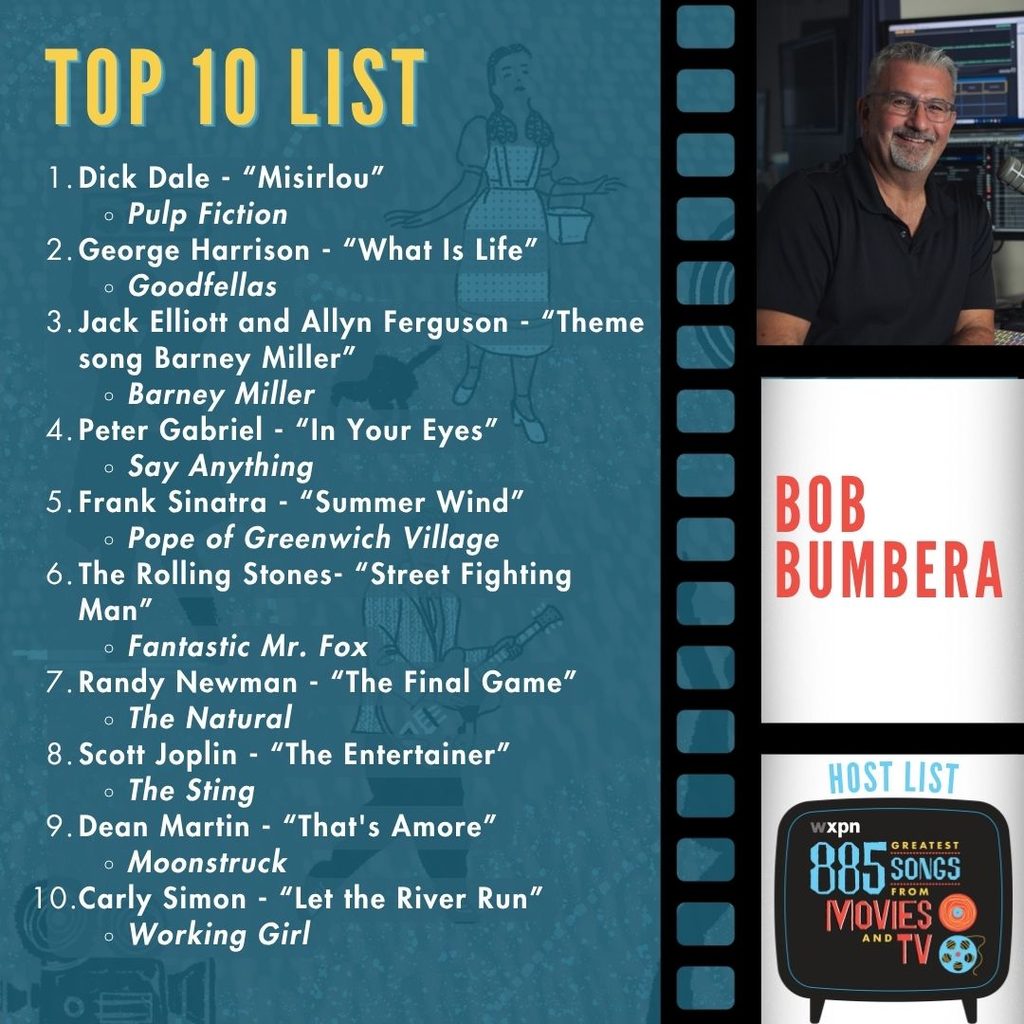
This was… so difficult! And I know in the days to come, my list will grow and morph. Breaks my heart to leave off the Proclaimers from Benny & Joon (my wife sang “500 Miles” our entire hike of Scotland this year), The Creation from Rushmore (totally revived that song and Wes Anderson should be represented somewhere), RJD2 from Mad Men, The Wire opening credits, Talking Heads in Stop Making Sense, The Band’s The Last Waltz, Costello on SNL and Future Islands on Letterman, heck—The Beatles on Ed Sullivan or James Bond’s iconic theme songs, Nick Cave’s “Red Right Hand” talk about setting the tone for Peaky Blinders, The Sopranos of England in the 1920s. BUT on this day, my picks lean into a few montage/ opening scenes—Rocky’s training montage, “Lust For Life” in the opening chase of Trainspotting, Travolta’s walk to the Bee Gees is Saturday Night Fever. You add my own generational anthem of Simple Minds from The Breakfast Club (among so many John Hughes options), Martin Scorsese’s incredible use of songs like “Gimme Shelter” or “Layla” or in this case, Nilsson’s “Jump Into the Fire” in Goodfellas, to the classic record store moment of John Cusack putting on the Beta Band in High Fidelity, a scene that played out so often while I manned the counter at JR’s Music World in my local mall and did my best to sell Violent Femmes albums. I also went with “Stonehenge” from Spinal Tap, the best music movie ever and movie that kicked the mockumentary phenomenon into gear. I had to include a tearjerker too—so props to Family of the Year, whose song “Hero” left me in a puddle at the end of Boyhood. And finally, I’m going back to 7-year-old me—enamored with the cartoon version and the Peter Sellers movies of The Pink Panther, whose theme might have been the first jazz song I loved. Tomorrow’s list might look totally different—and that’s the beauty of these 885s—to get us thinking, remembering, sharing—and the power of music to bring us all together. Good luck with your lists!
I have about 400 honorable mentions for this list. This was impossible. I tried to go with the ones that immediately made me feel something, scenes that stuck with me or that led to me listening to the song on repeat for days after seeing the show or movie.
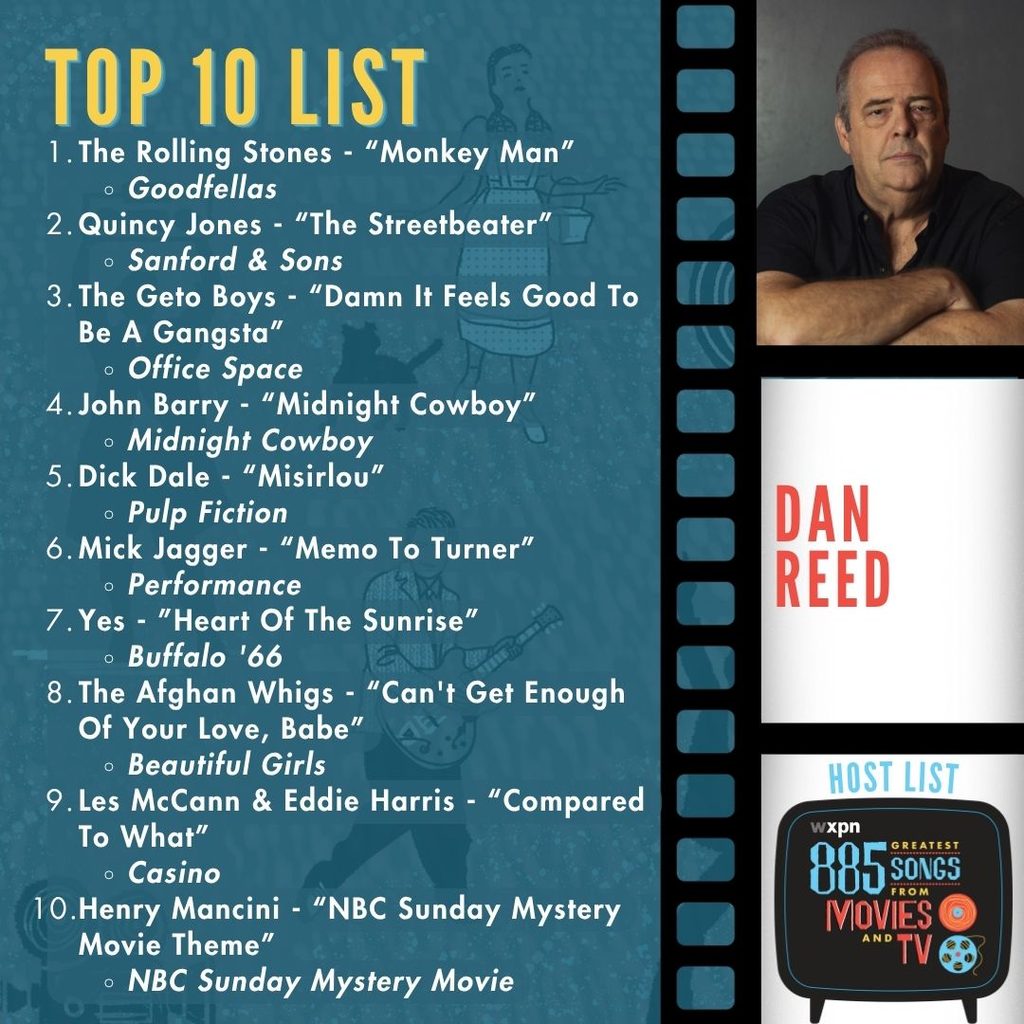
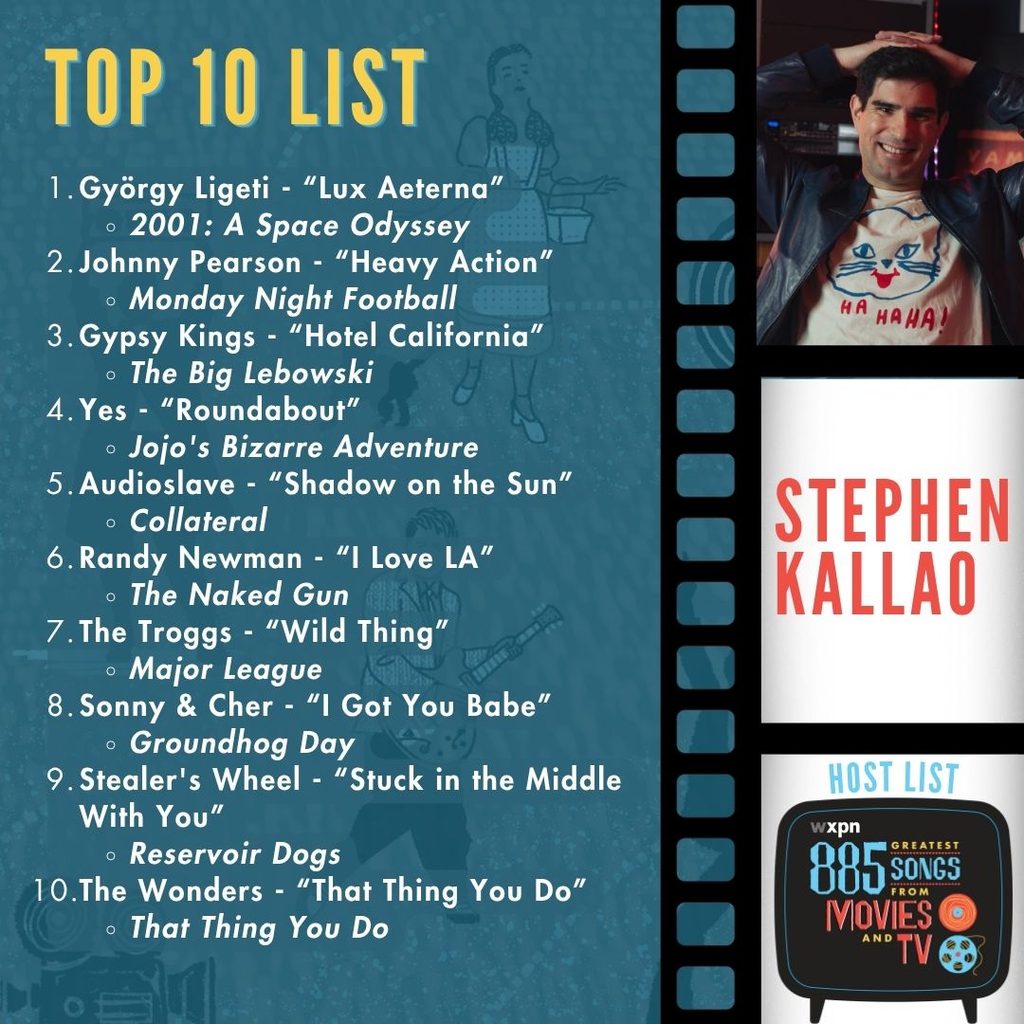
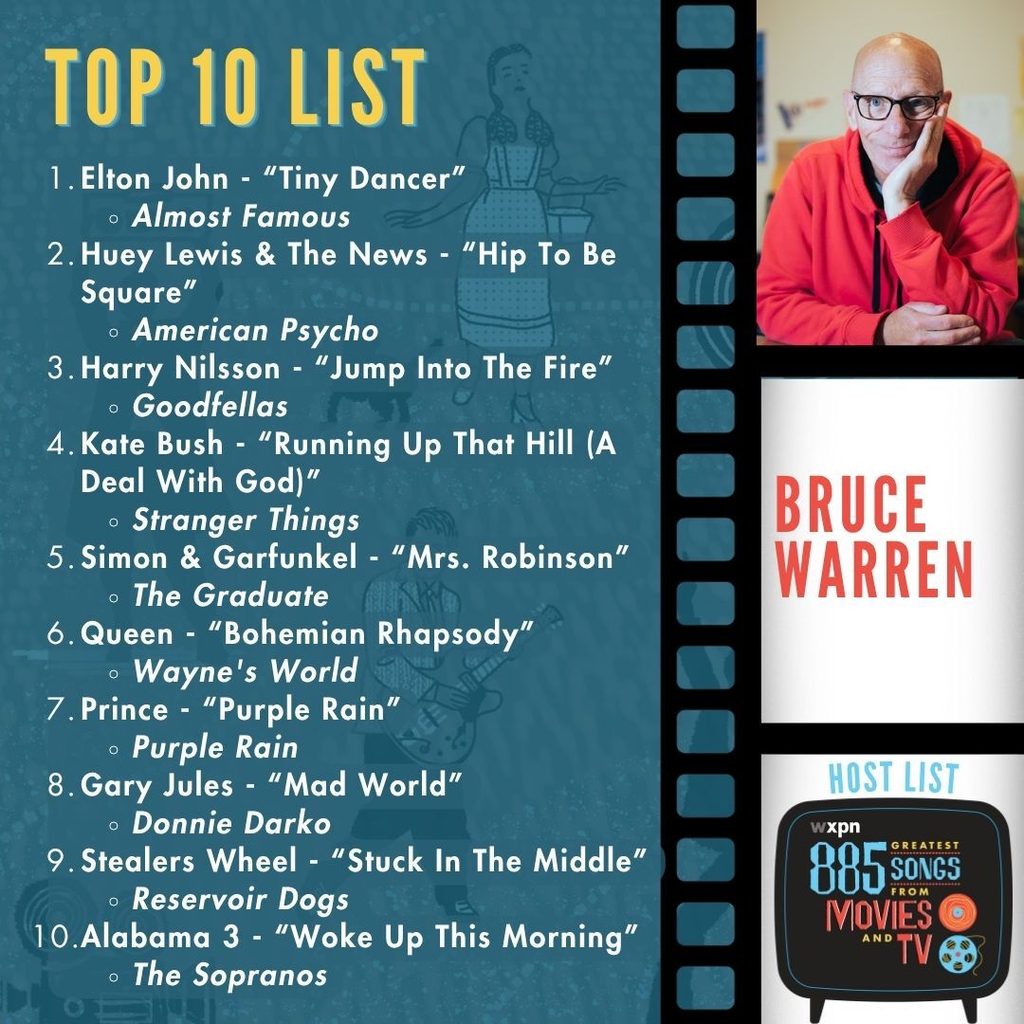
Some of my favorite needle drop moments from film and television. Kubrick using one of the most haunting pieces of music ever recorded to showcase mankind stepping into the void of the universe. Leslie Nielsen foiling a madcap caper to the delight of Randy Newman’s “I Love LA.” Forever waking up to Sonny & Cher. Torture gone wrong (or right!) with Stealer’s Wheel. The roar of the Cleveland faithful hearing “Wild Thing” in a do-or-die matchup. All iconic. Plus, I saved space for the greatest television theme ever IMO.
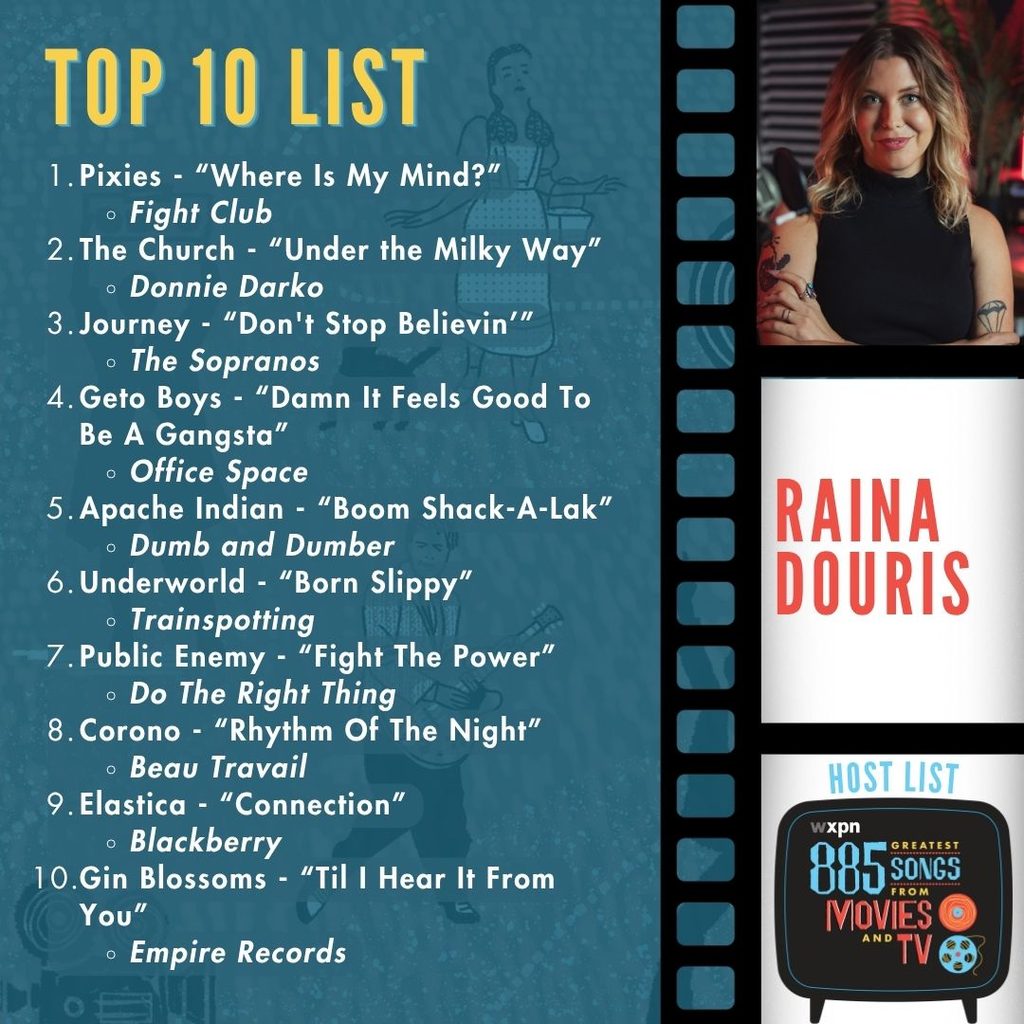
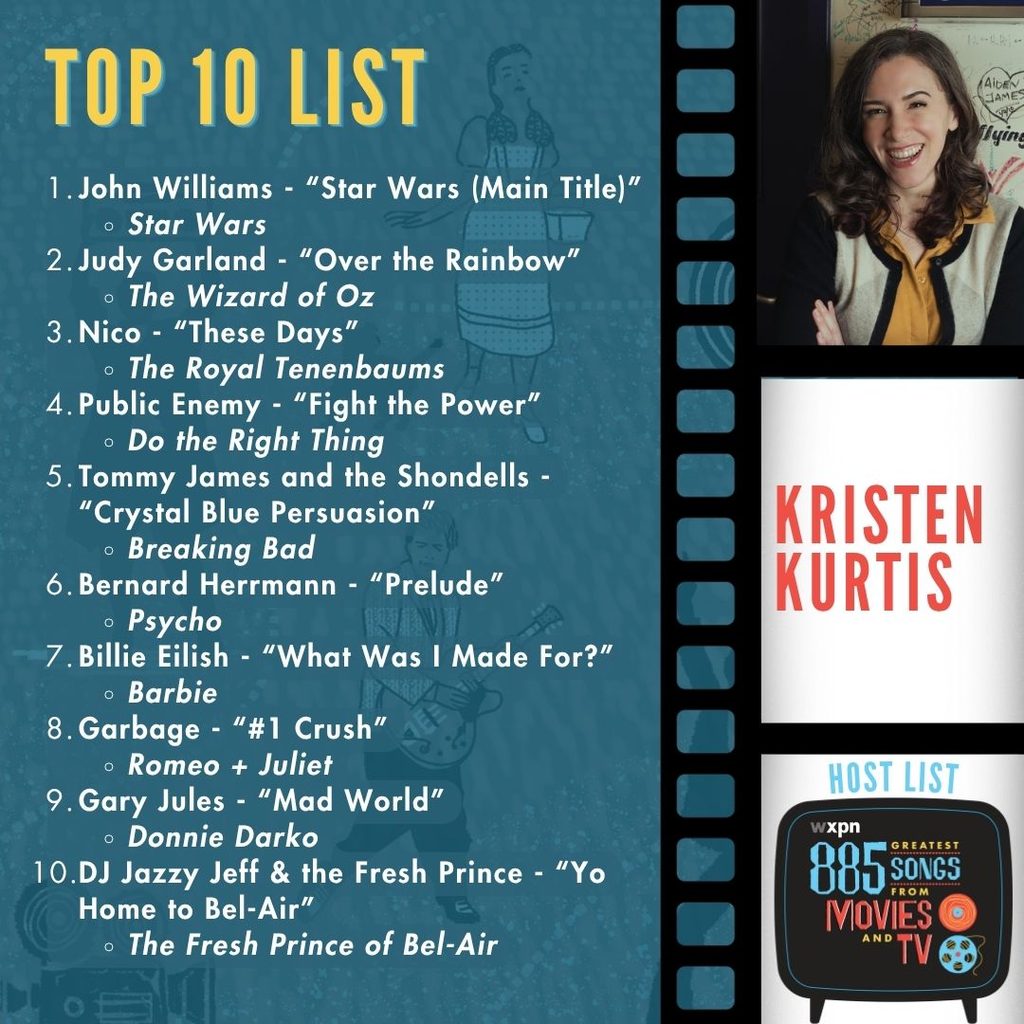
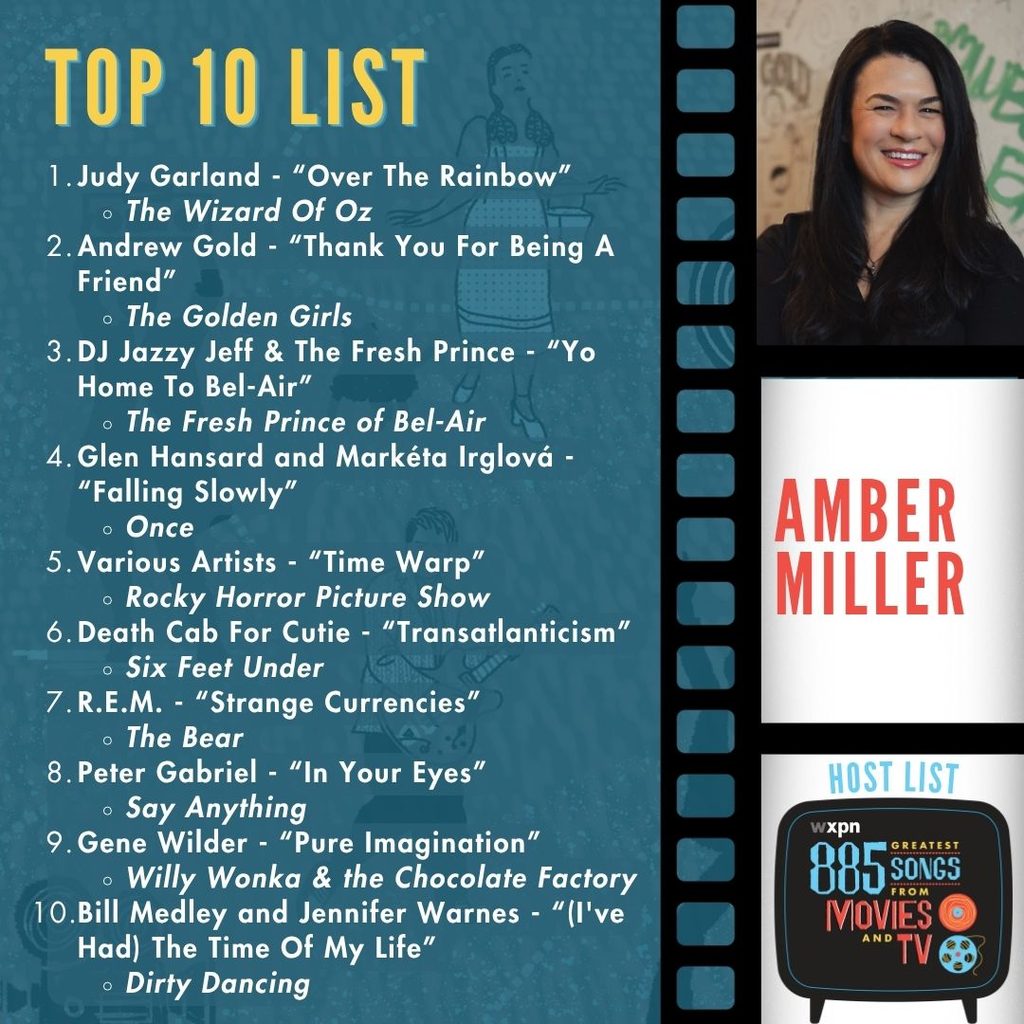
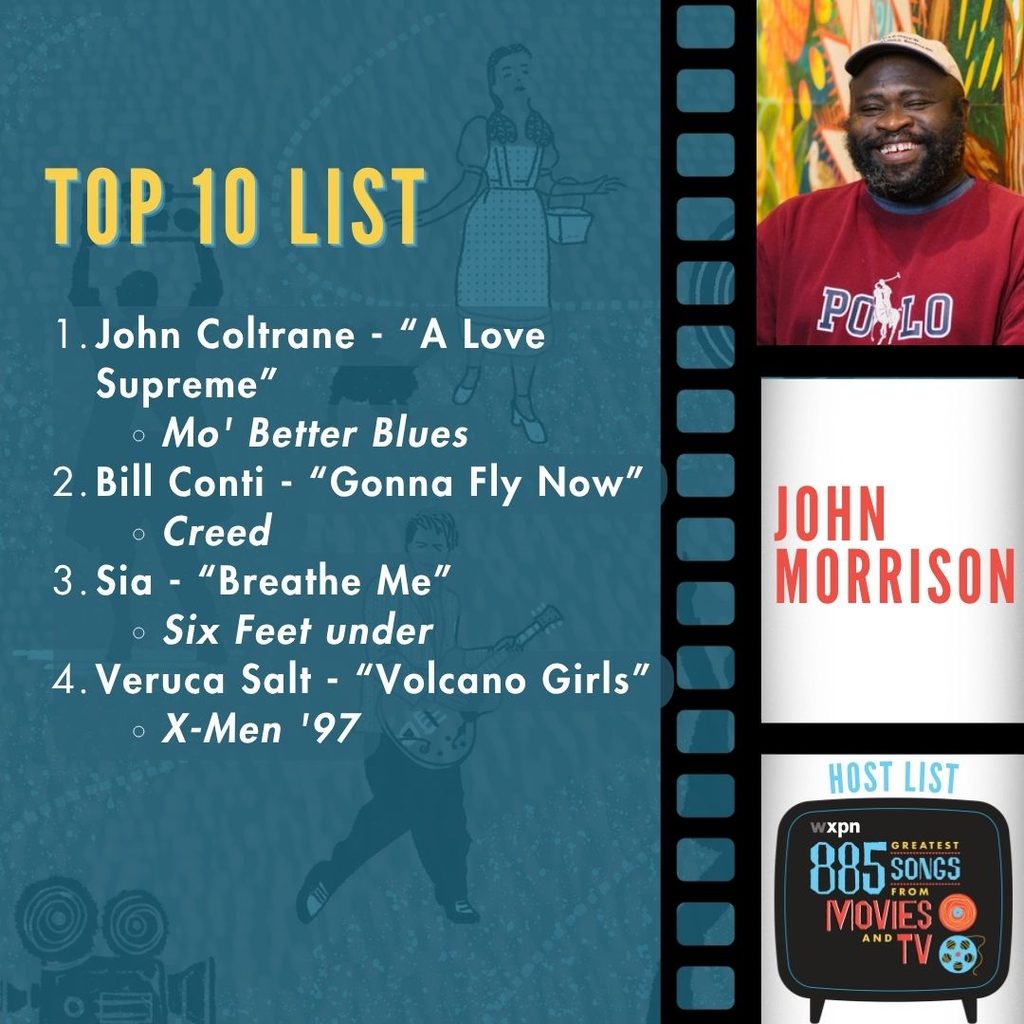
These songs are quite evocative of strong emotions for me. I literally feel like I’m flying through space when I hear the Star Wars theme, and my pulse quickens at the sound of the prelude to Psycho. Some of these artists perfectly capture the vibe of the film they were asked to soundtrack—like Judy Garland’s “Over the Rainbow” making you yearn to be as free as a bluebird, Public Enemy fueling the tension of Do the Right Thing with “Fight the Power,” Billie Eilish creating the space to reflect on what you were made for, and Garbage reminding you of what it was like to be a lovesick teenager a la Romeo + Juliet. Other songs are so well placed, they may as well have been written for the scene—the tenderness of Nico and Margot in the Royal Tenenbaums, Gary Jules’ cover of “Mad World” correcting the timeline in Donnie Darko, and “Crystal Blue Persuasion” basically becoming a jingle for the product in Breaking Bad. And as a kid from SEPA, a “Yo Home to Bel-Air” singalong never fails to bring me joy!
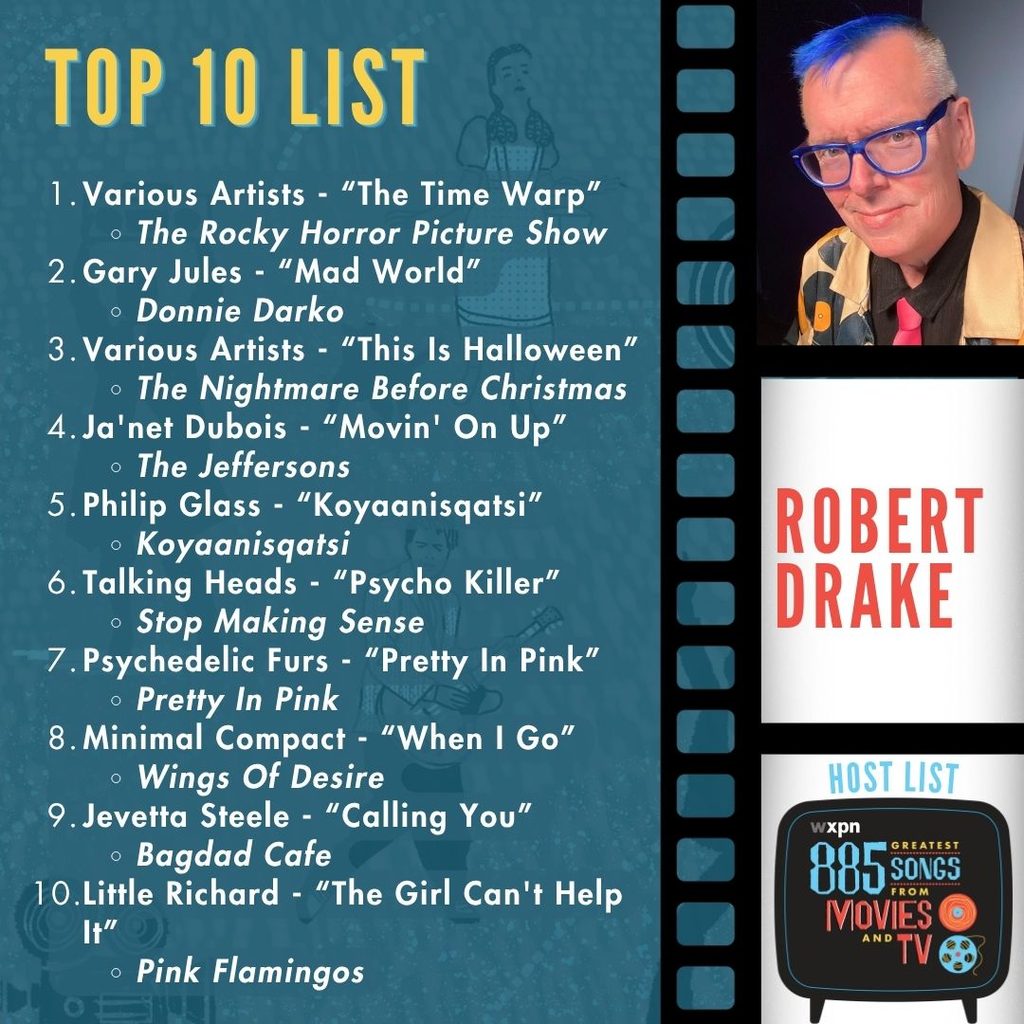
While I grew up on television, my formative years (’80s) were wall-to-wall cult classic movies … I spent too many hours in the dark at Philly’s Ritz theaters (etc.) and this list proves it…
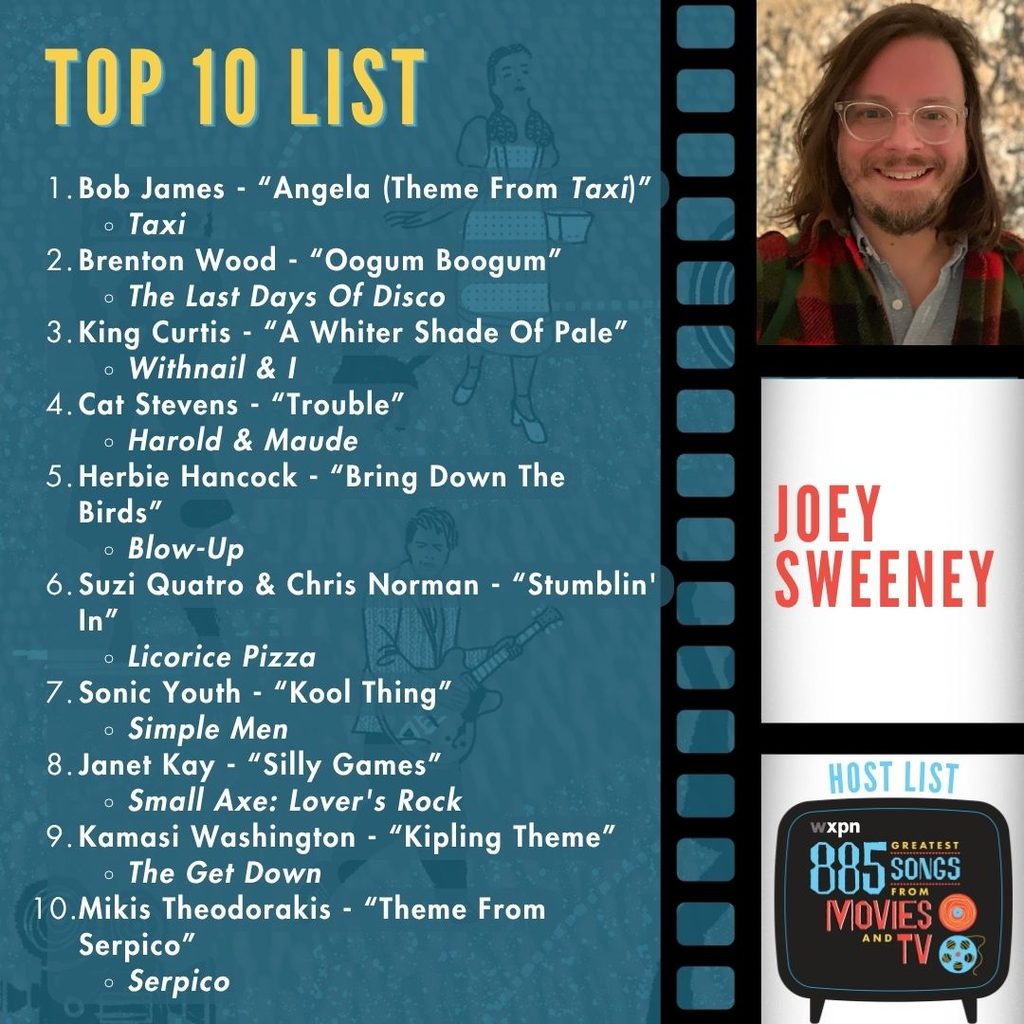
When I hear these songs they generally convey some kind of emotional response. Each takes me back to a certain time in my life or just remind me of a great movie or sequence. Others, I just love the vibe.
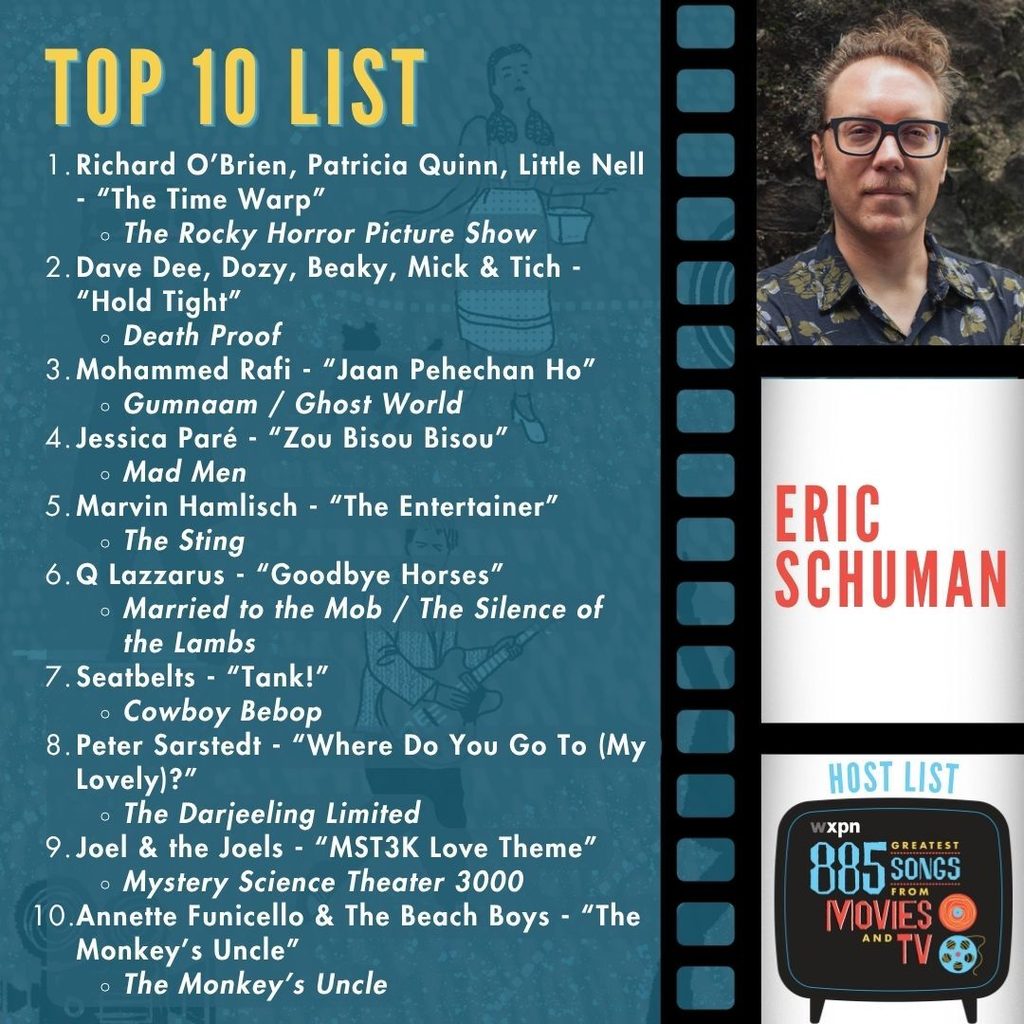
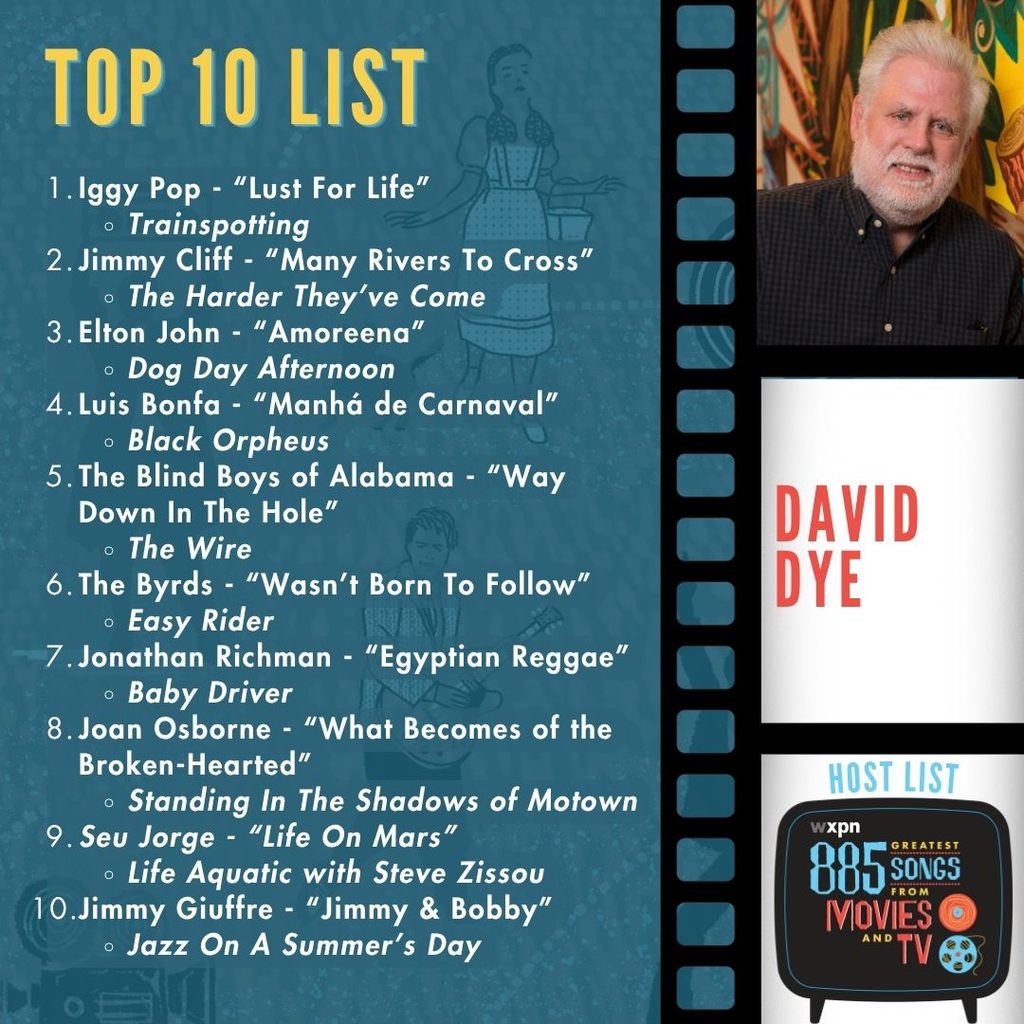
I love to hear unexpected appearances of songs I love in films, which means I could have used the soundtrack to almost any Wes Anderson film! Also love scene setting opening credits song: Trainspotting, Dog Day Afternoon and the opening instrumental from Jazz On A Summer’s Day. I seem to have picked some songs from movies about music as well.
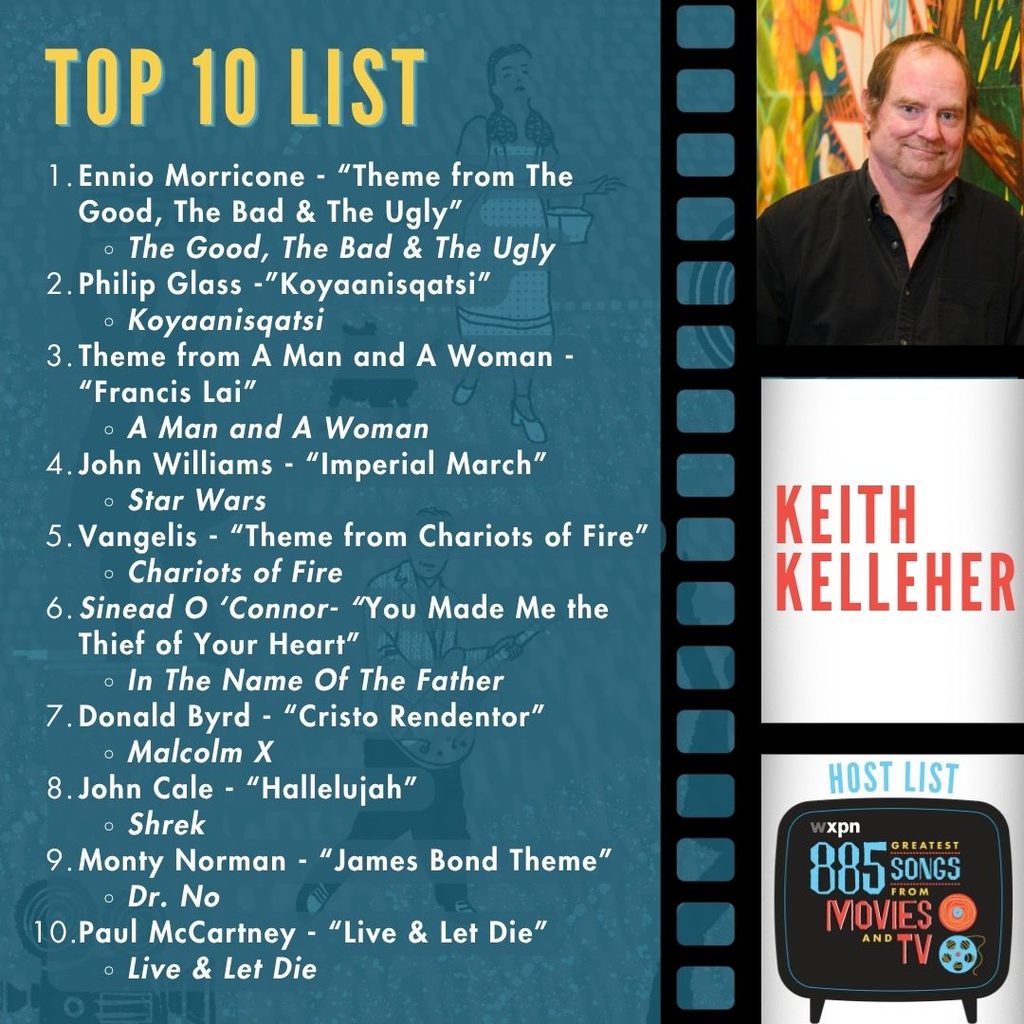
I think what all of the above share is they all come from movies with truly exceptional style cues—both in terms of the films themselves but also, notably, the clothes people are wearing in them.
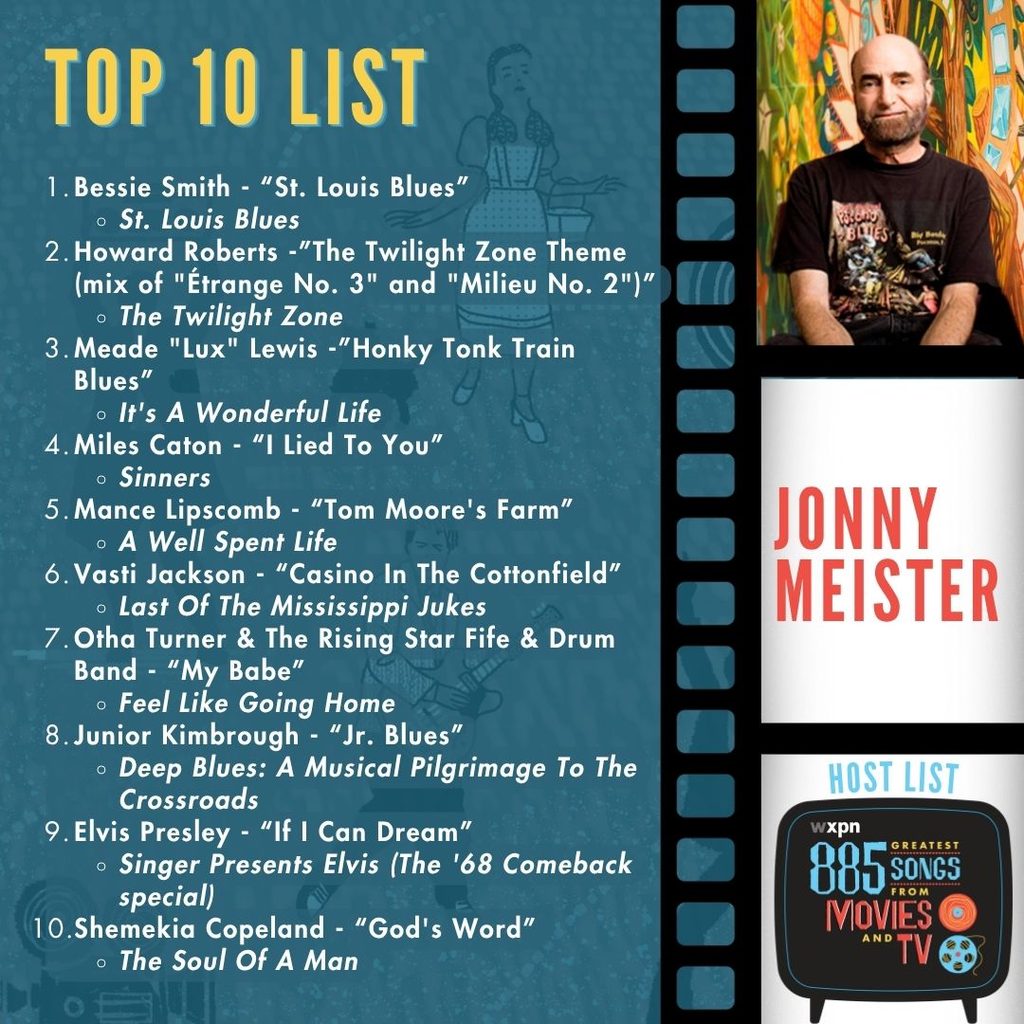
Bessie Smith first recorded “St. Louis Blues” in 1925. In 1929 she performed it in a short film of the same name. As much as any song, it personified the blues form in the 1920s. In its second season the producers of The Twilight Zone ditched the theme they had in favor of two “stock” pieces they had on hand composed by Marius Constant, “Étrange No. 3” and “Milieu No. 2”, put together as a theme. In those years if you told a story of something strange or unexplainable to someone, they may well have responded by humming The Twilight Zone theme. Meade “Lux” Lewis, the boogie woogie master whose “Honky Tonk Train Blues” was definitive of the style, was never credited for his appearance in It’s A Wonderful Life. It’s hard not to see racism at work, both in his being snubbed in the credits, and the film’s story line, imagining the town going downhill by using a black musician playing the blues to depict its fall from grace. Mance Lipscomb’s original recording of “Tom Moore’s Farm” was listed as by “Anonymous,” so feared was plantation owner Tom Moore, though anyone who knew his music immediately knew it was him. In later years he joked about it, but it was no joke in the 1960s. Otha Turner & The Rising Star Fife & Drum Band present a side of Mississippi music often overlooked, the fife and drum bands that performed especially in the hill country north of the delta. Elvis Presley’s manager “Colonel” Tom Parker didn’t want him to sing “If I Can Dream” in his 1968 special, coming just a few months after the assassination of Martin Luther King, but Elvis insisted, giving us one of his most powerful performances and a message that resonates to this day. Shemekia Copeland sings J. B. Lenoir’s song expressing frustration with and questioning about God and what God is doing in one of the films in Martin Scorsese’s series The Blues, The Soul Of A Man directed by Wim Wenders, that also offers footage of Lenoir (who died in 1967) performing this powerful song.