Inside the visual world of Making Time ∞ with Klip Collective
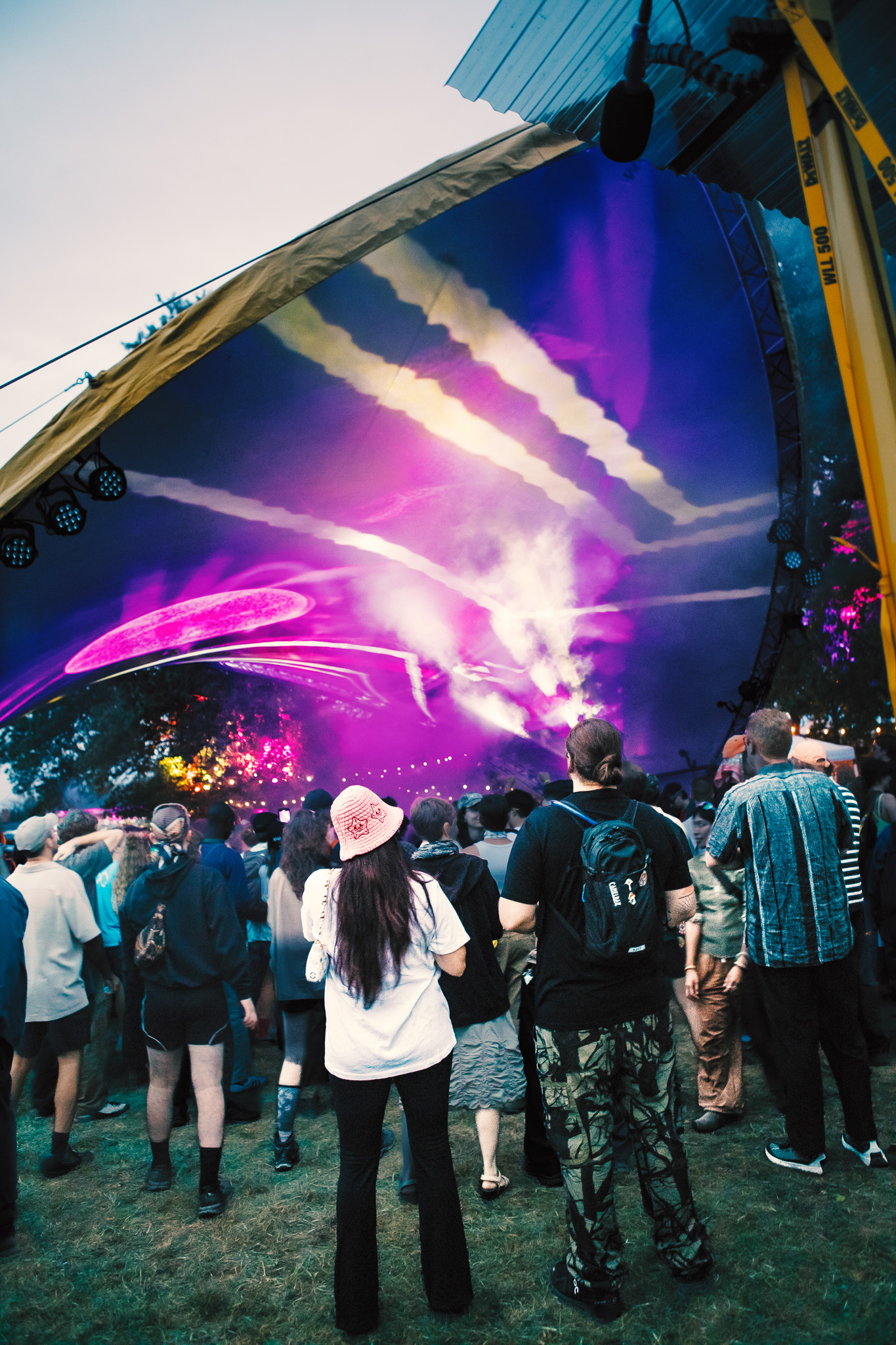
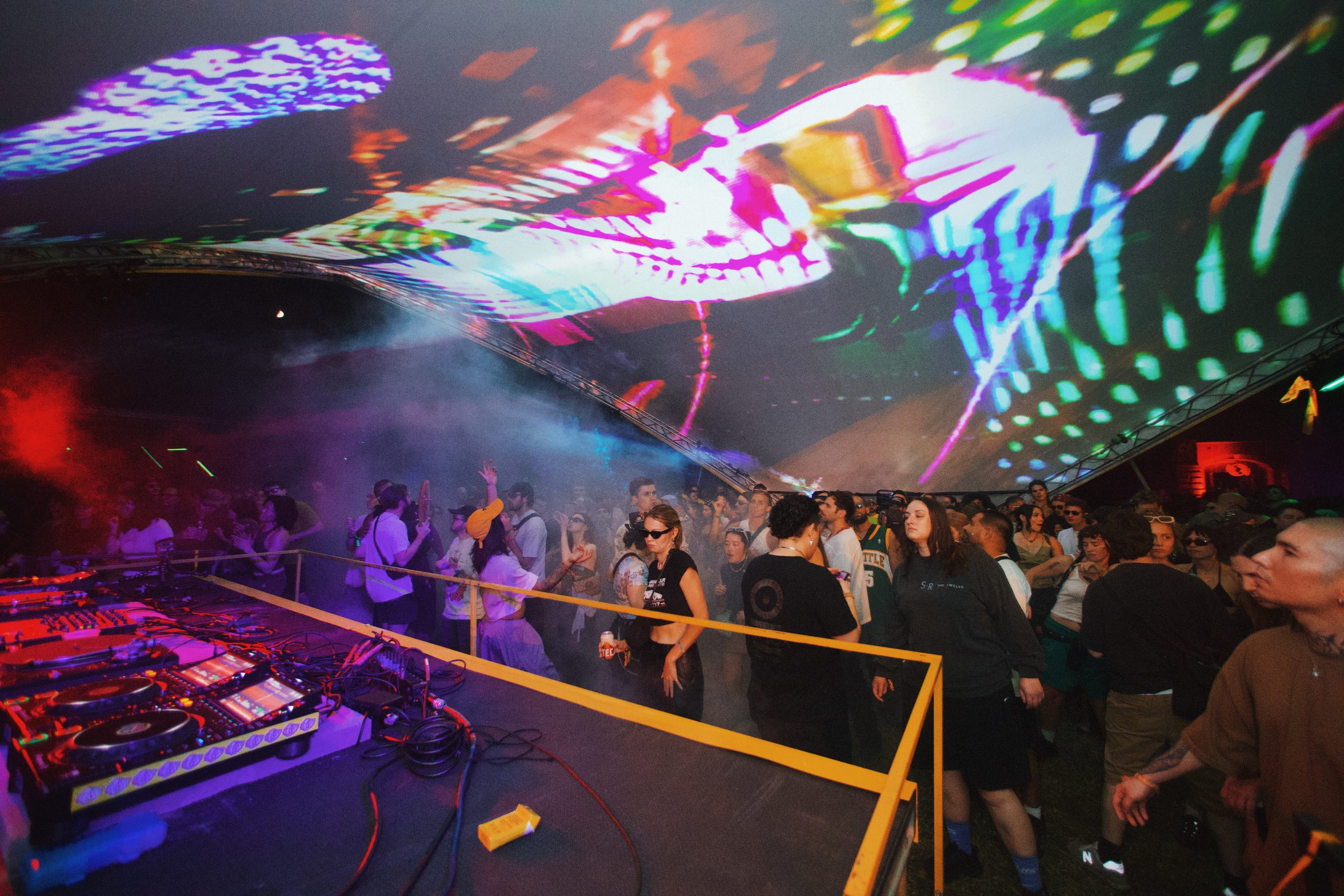
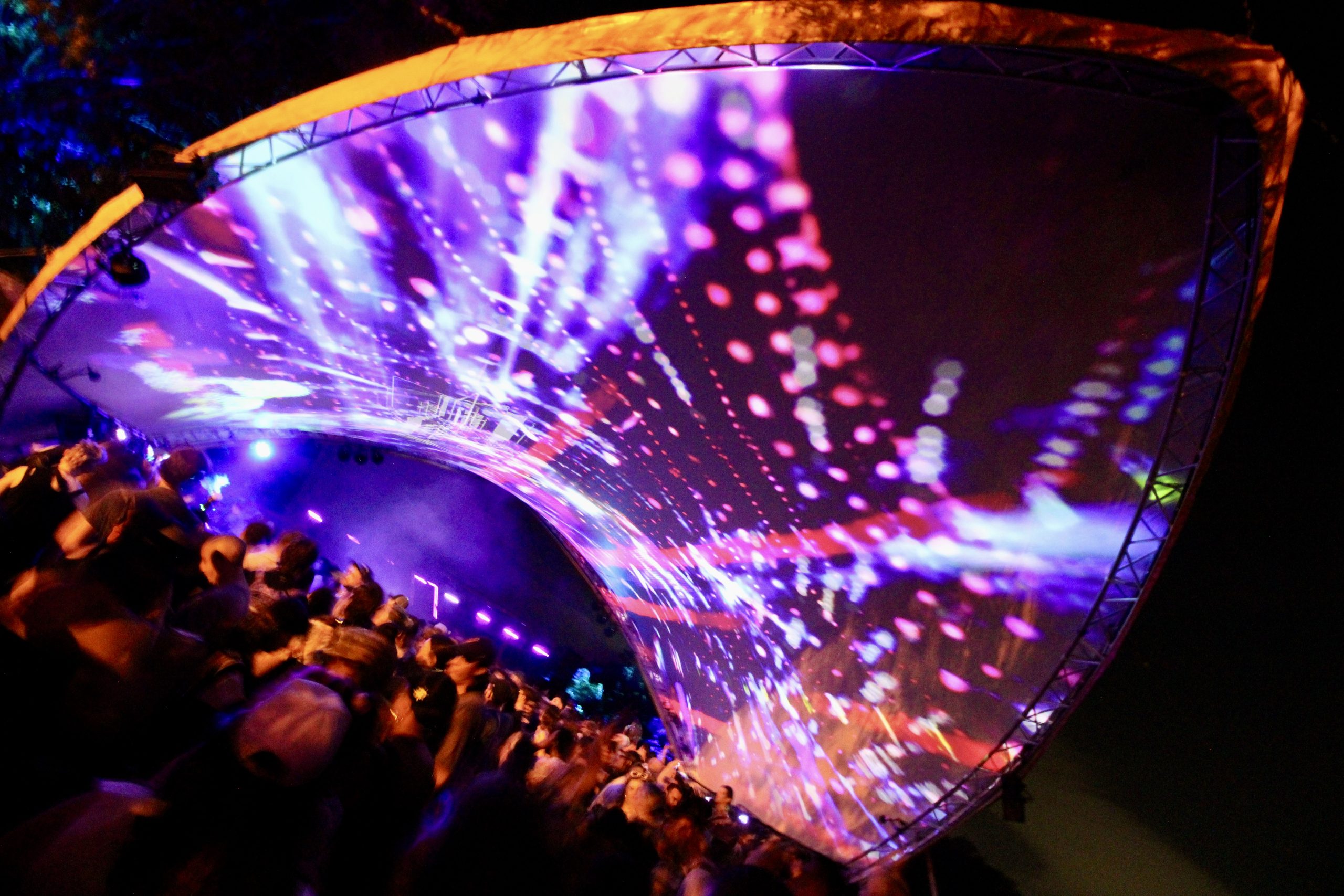
Four projectors are pointed at a giant parabola at Making Time ∞, the annual Philadelphia festival that takes over Fort Mifflin each September. It is, in Ricardo Morales’ words, “projection mapping in its most fucked up form.”
Morales founded Klip Collective, the Philadelphia-based visual production company behind much of the Making Time event’s projection and lighting.
The structure, known around the festival as “the Pringle,” is three-dimensional and covered in curves, making it a particularly strange surface to project onto.
Projection mapping is essentially the process of fitting an image to a physical surface, “pushing pixels to fit the physical form of what is being projected upon,” Morales explained during a walkthrough of the site. On a building, for example, you can shape the image to follow the architecture. The Pringle is different: its curves bend the projected light, so Klip has to work the image to fit the shape in three dimensions.
They’re doing that across four projectors, which must be aligned and blended into one seamless image. The goal is for whoever is running visuals to be able to plug in a computer and treat the entire Pringle like a single screen. Getting there means putting up a grid, adjusting the image, and visually working it into the shape.
Morales compares the process to trompe-l’oeil, the painting technique that creates the appearance of a three-dimensional object or scene on a flat surface. His example is Wile E. Coyote painting a tunnel onto a rock, only for the Road Runner to run straight through the supposed opening and leave him face-first against the wall. Projection mapping is essentially a modern version of that trick, using light and pixels instead of paint.
To help with the setup, Morales brought in Florian Mosleh, a projection mapper he calls “basically the best in the country.” The two spent hours working through the Pringle’s curves, getting four machines to behave like one.
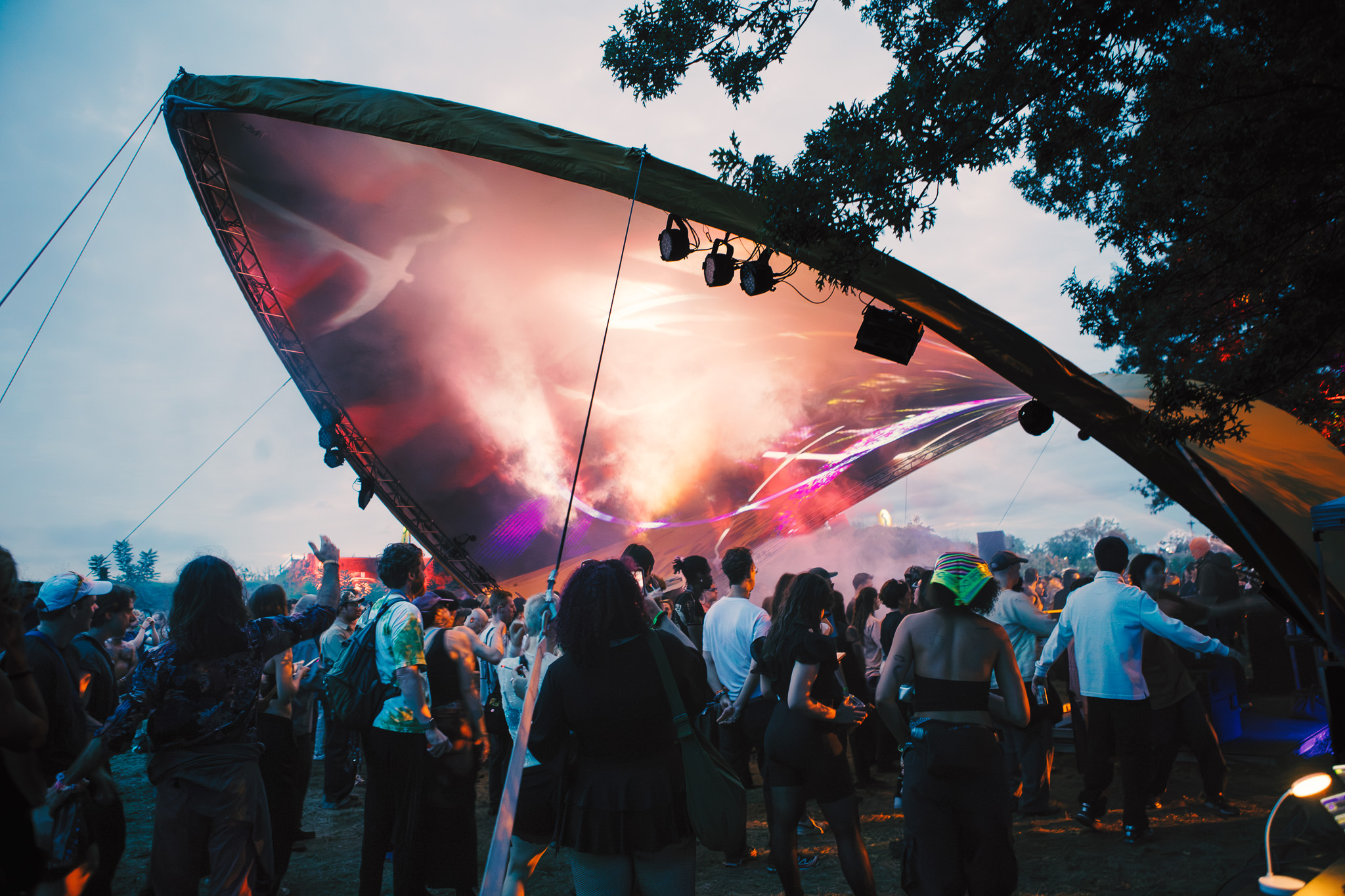
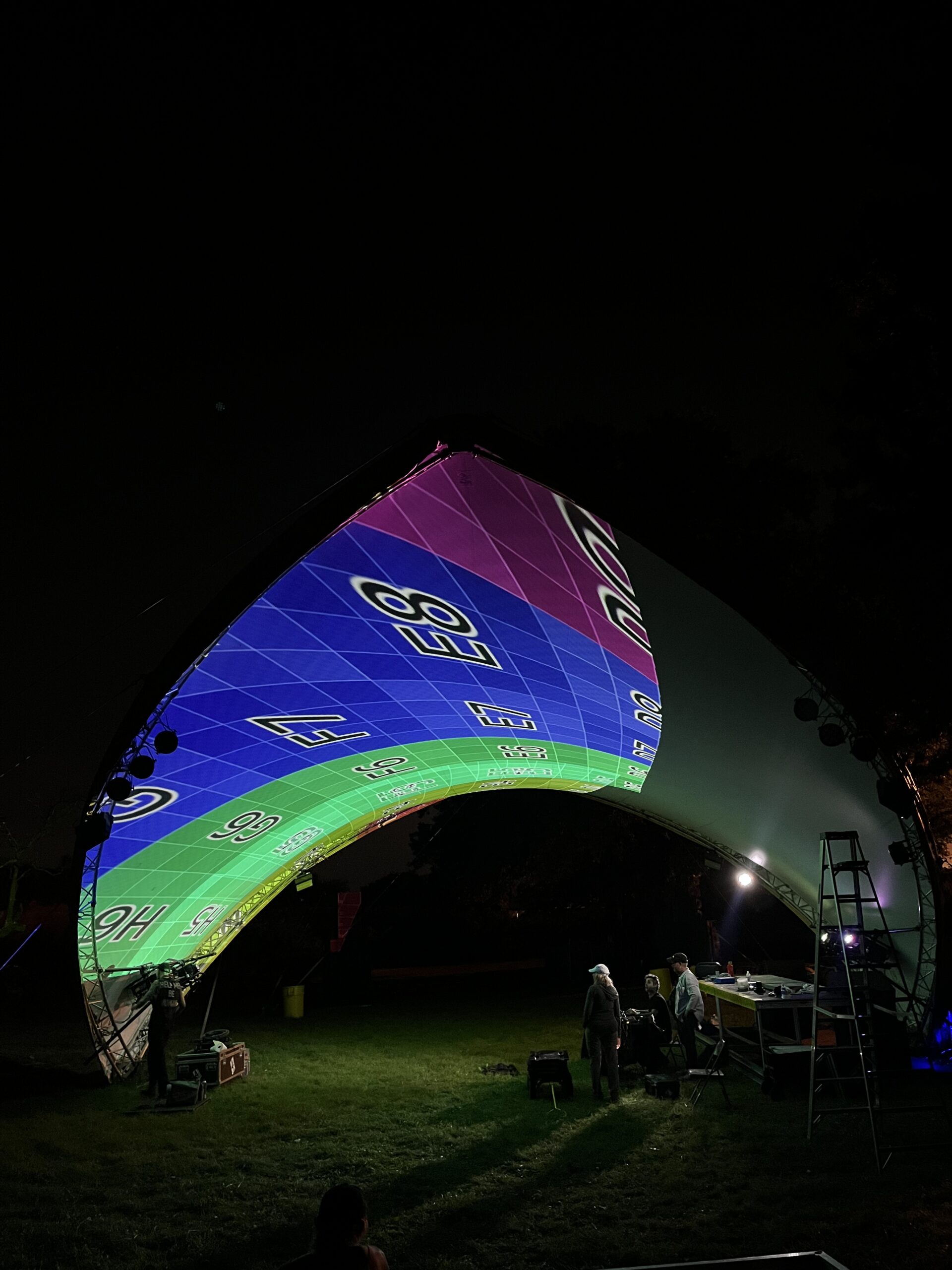
The Pringle is one small part of a relationship between Klip and Making Time that goes back more than two decades. Morales started working with Making Time founder and curator Dave P in 2002, and the two have been developing a creative shorthand around projections, lighting, and whatever else they could come up with to make each new space feel different.
A few years into their alliance, someone overheard them talking through a project and asked if they were discussing work. “It’s kind of like a book club,” Morales remembers saying.
Making Time ∞ at Fort Mifflin might be the biggest Book Club project yet.
When the festival first moved to Mifflin in 2021, it presented a new space to work with: a historic military fort with walls, windows, paths, mounds and plenty of strange corners to turn into part of the visual environment. Now, Klip works across six stages, using projections, lighting, and other visual systems throughout the fort.
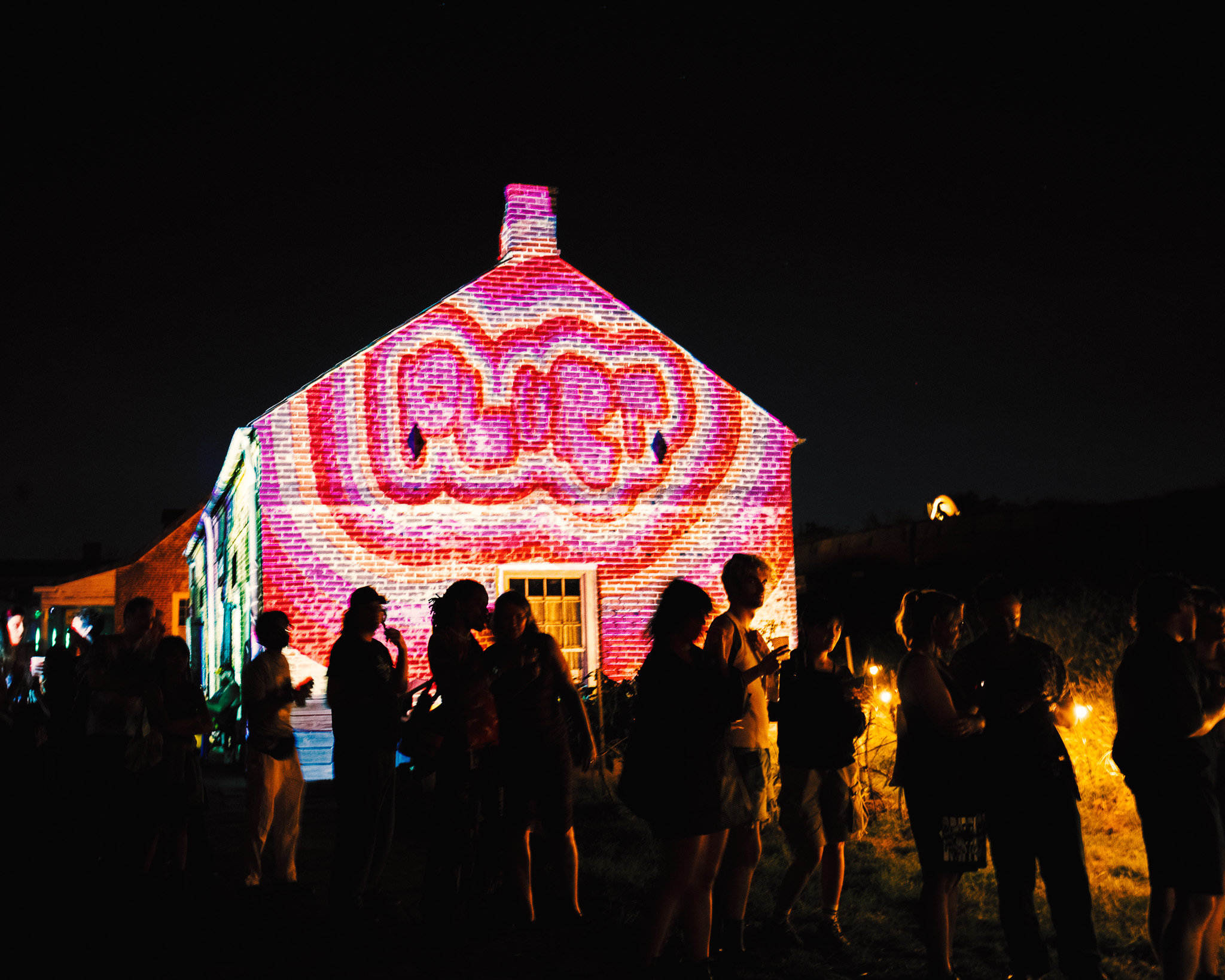
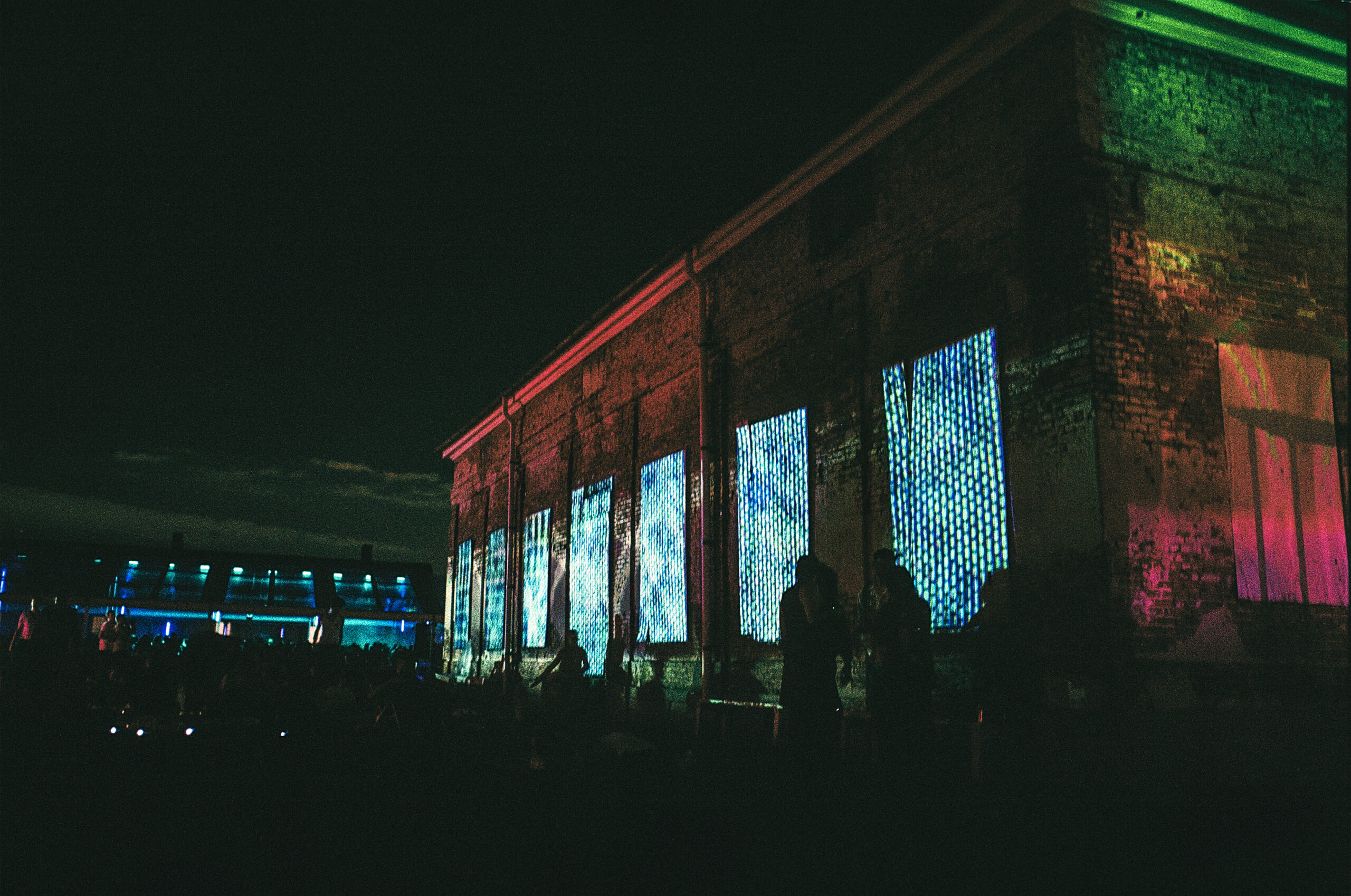
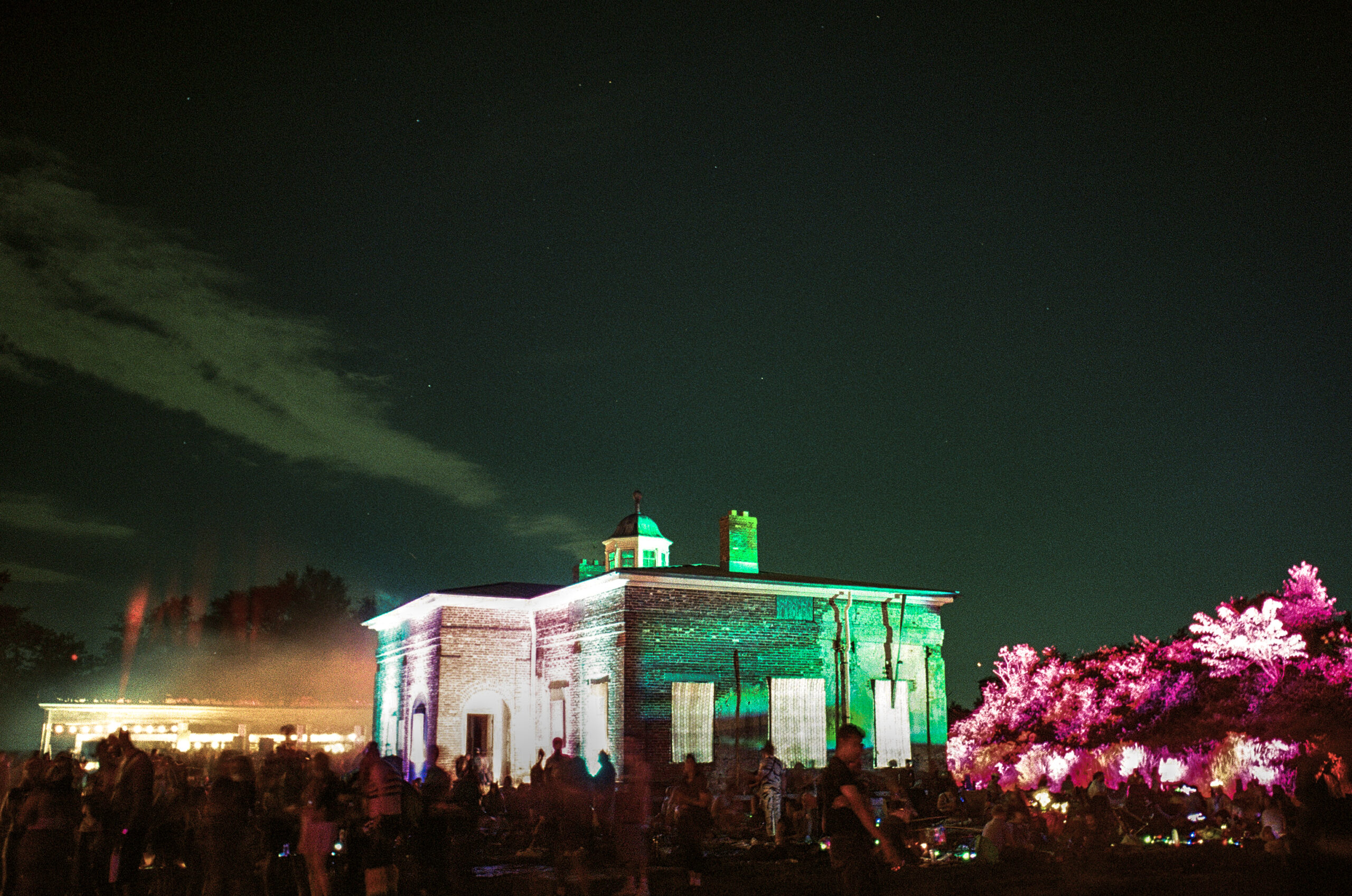
The Citadel, a large brick building at the center of the festival grounds, is probably the clearest visual example of Morales’ long relationship with the fort.
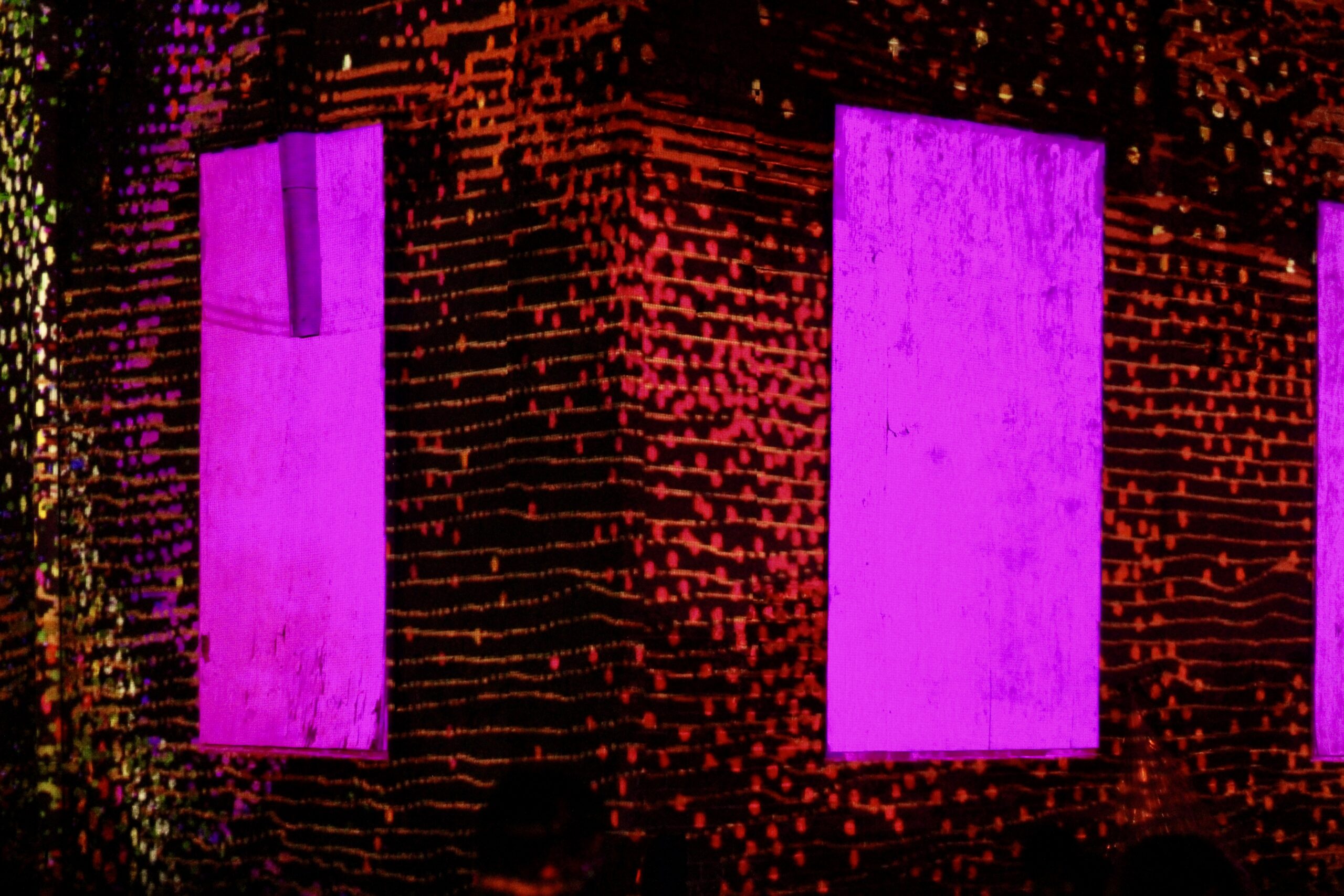
Originally built as the fort’s last line of defense, the Greek Revival structure was later converted into the Commandant’s House. A fire gutted its interior in the 1980s, leaving much of the building an empty shell, with plywood now covering its windows. For Klip, those plywood-covered windows also happen to make a useful projection surface.
Morales has projected onto the Citadel every year since Making Time moved to Fort Mifflin, and it was the first thing he mapped when the festival arrived.
Today, the Citadel is one of Making Time ∞’s most recognizable visual landmarks. You can see it from different parts of the grounds, and people spread blankets around it, sit on the grass, and use the area to regroup between sets. The fort’s former place of retreat has become one of the festival’s places to congregate.
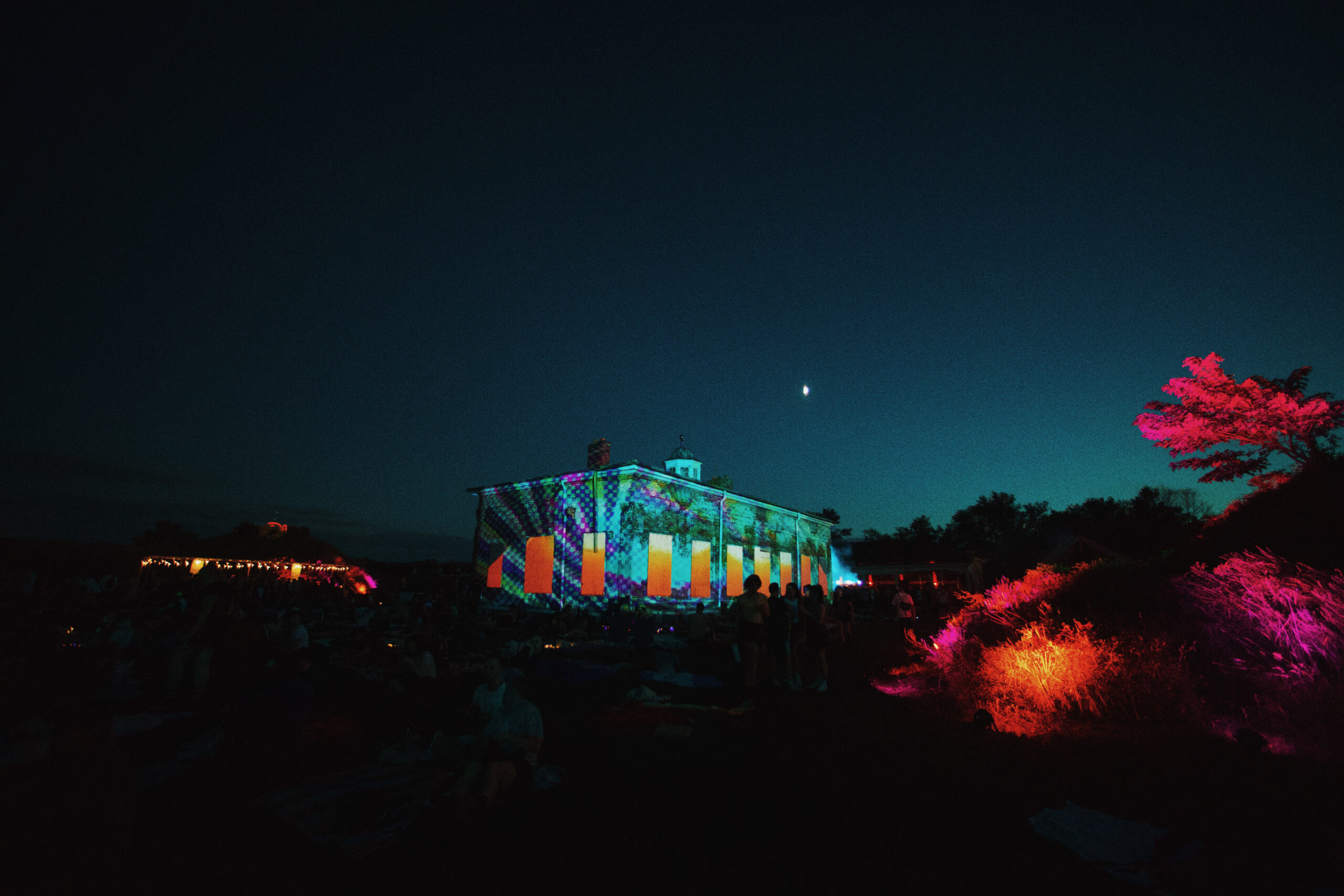
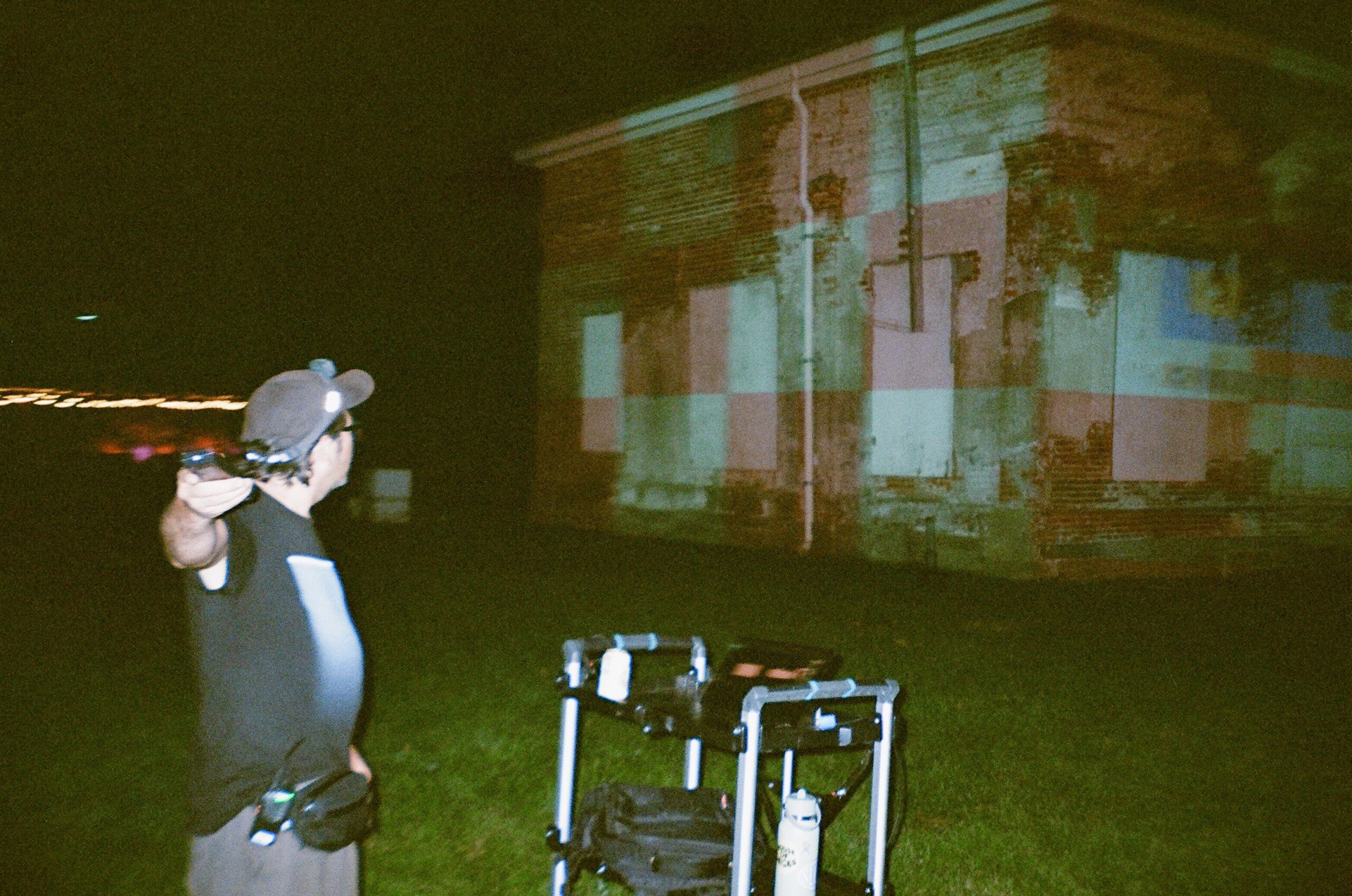
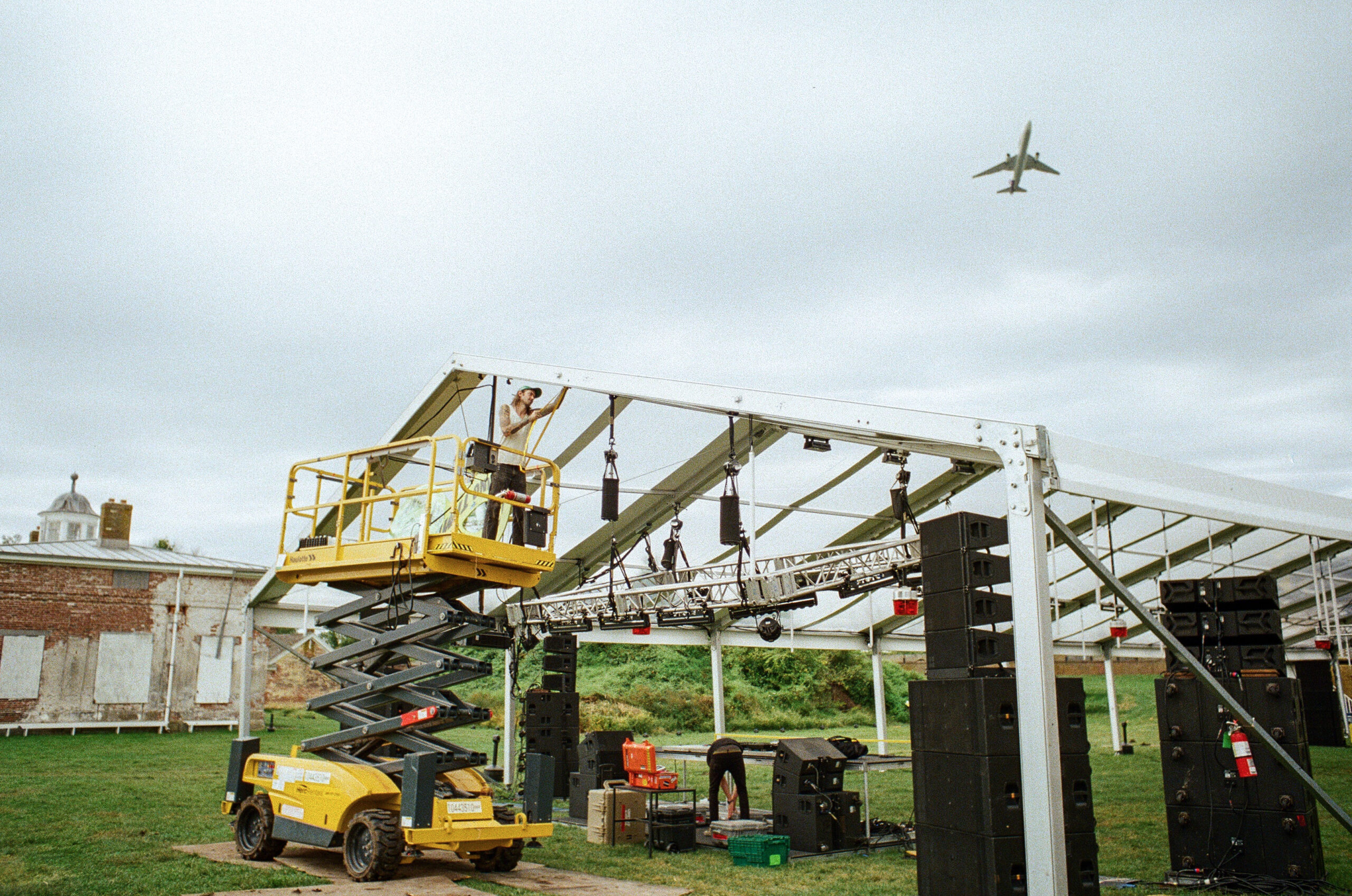
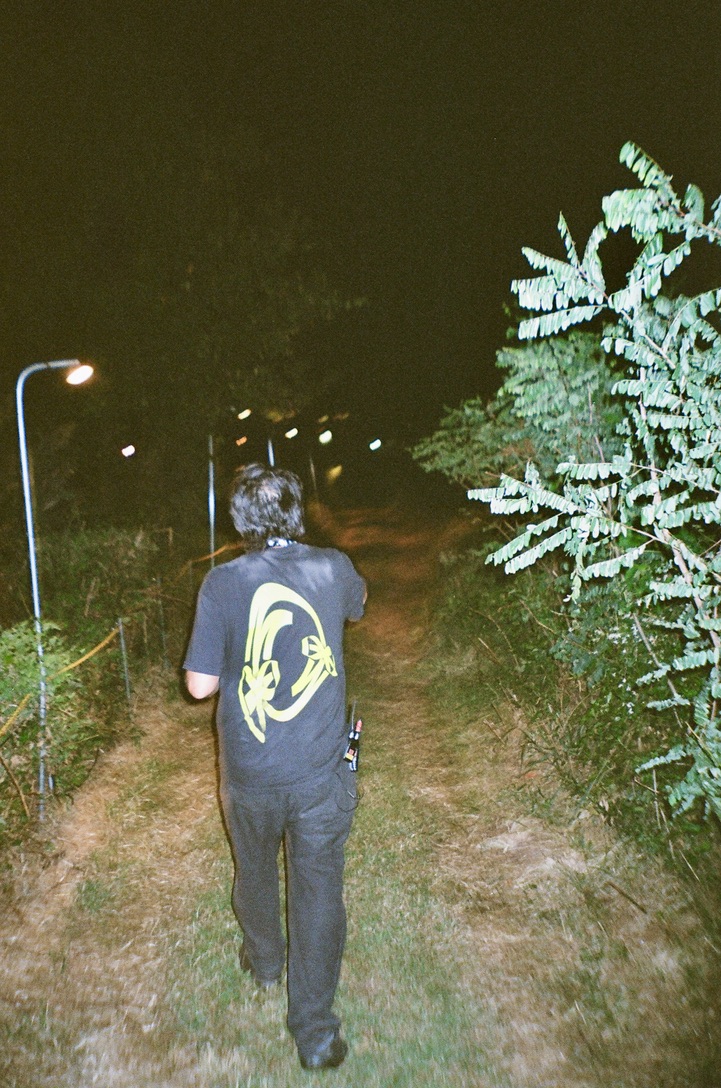
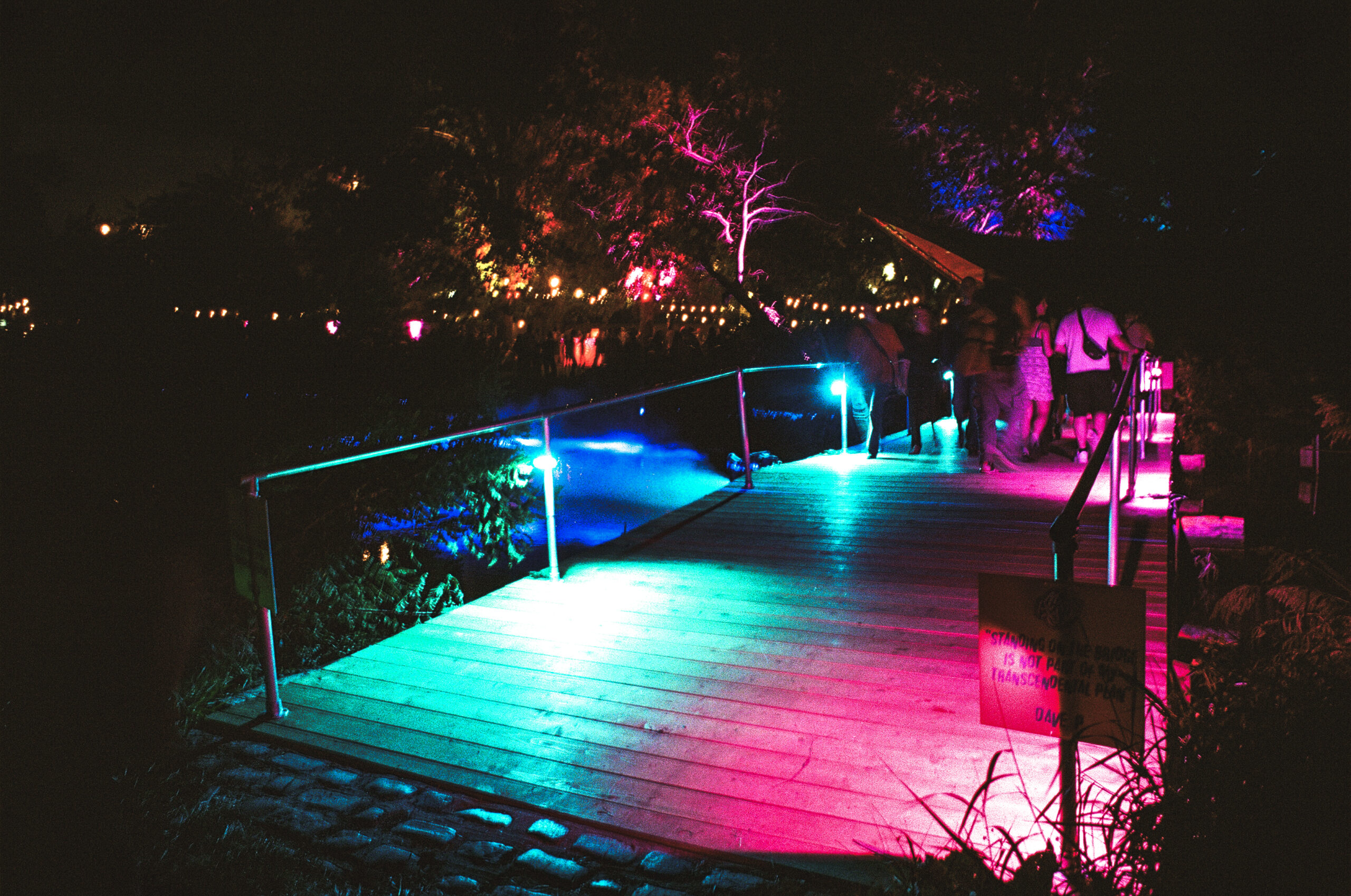
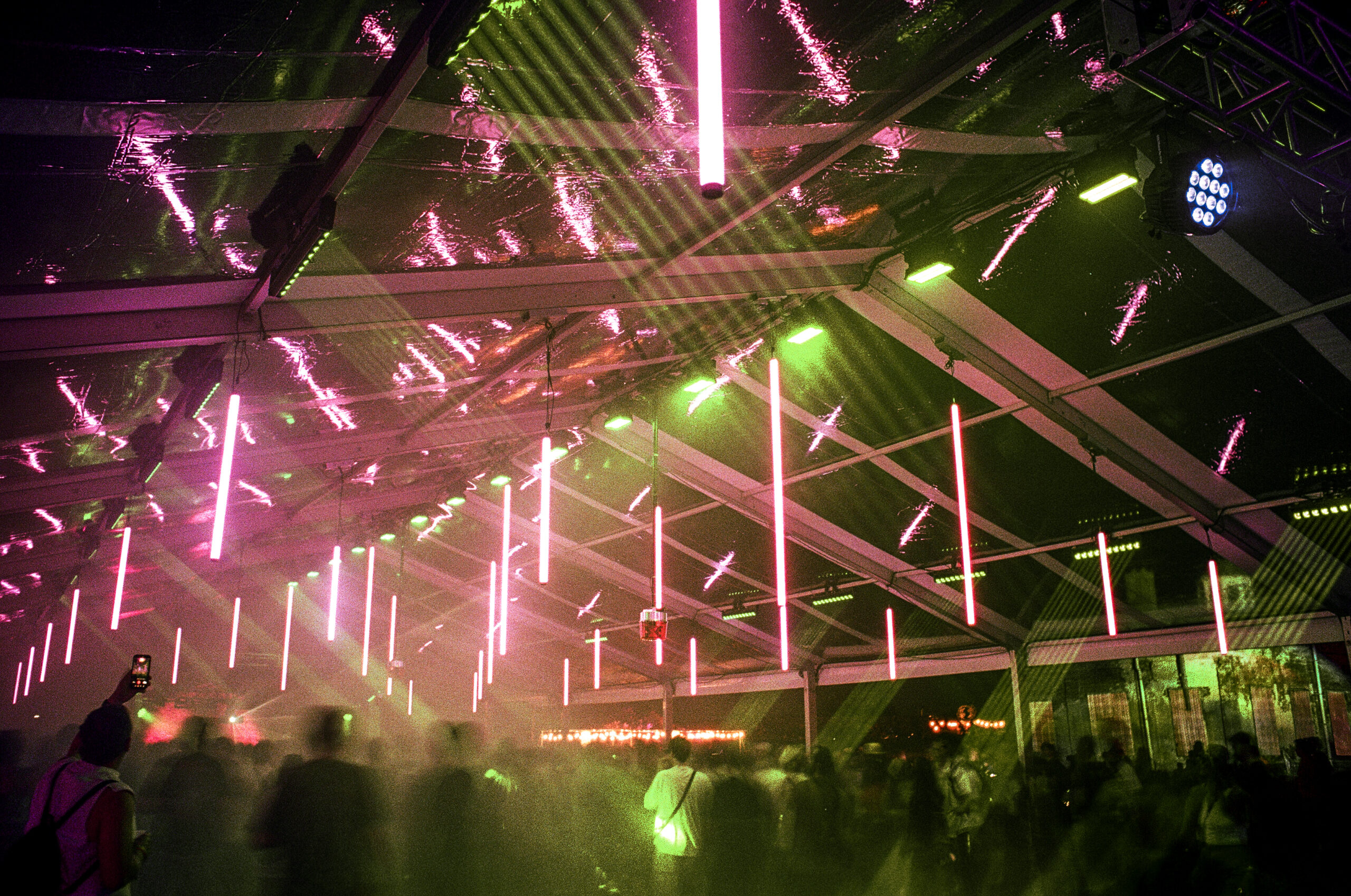
Before the crew arrives at Fort Mifflin, the space is essentially blacked out after sunset, save for a few bulbs. By the time the festival opens, there are illuminated paths, walls and mounds, lasers stretching over the moat, and Klip’s “light stalks,” long illuminated sticks that have become part of the company’s work at Making Time and other events.
Getting all of that in place takes a large crew and a lot of coordination.
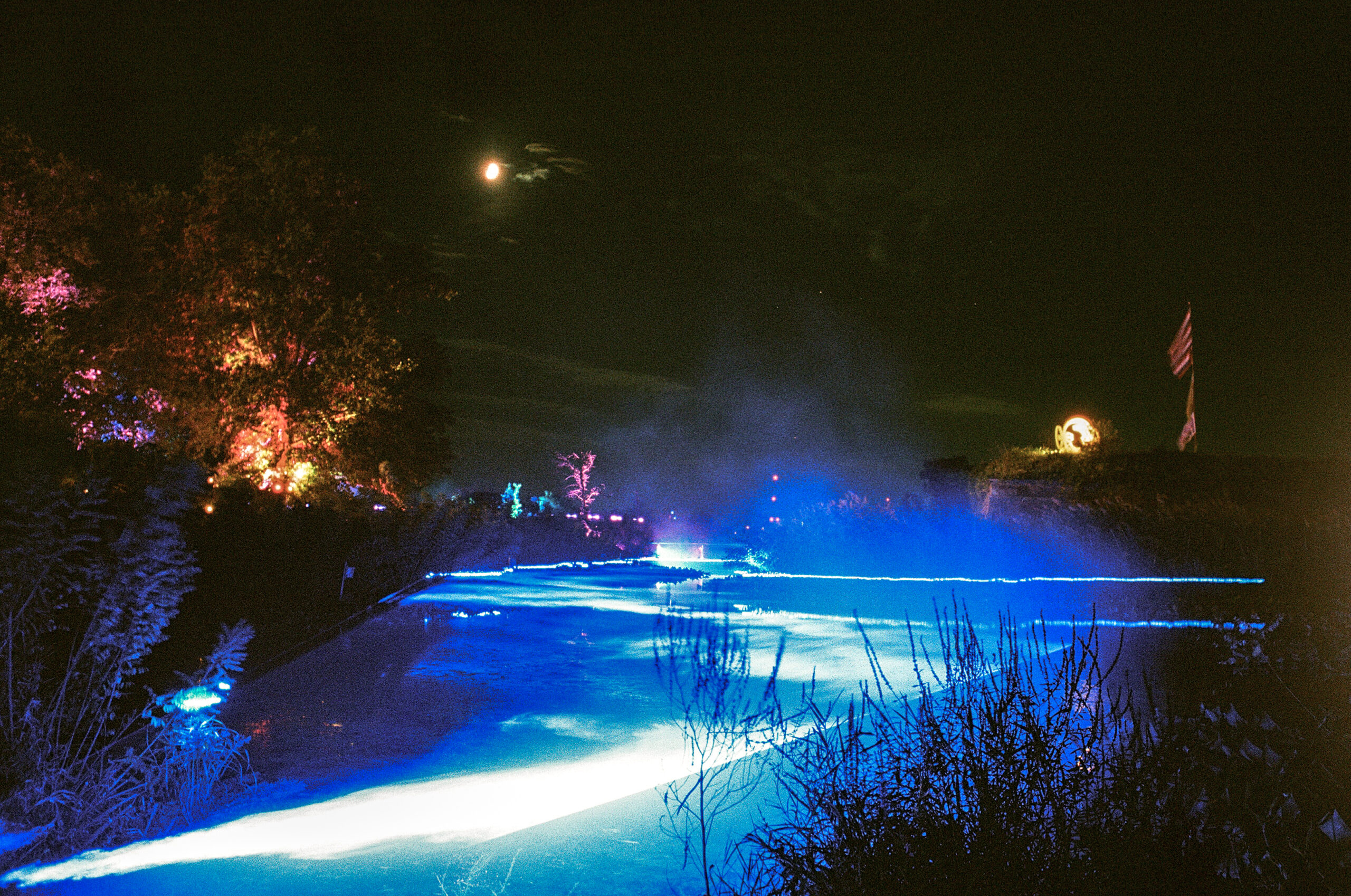
In previous years, Morales was managing more of those people directly. This year, for the first time, he says, Klip divided the operation into departments and zones with people responsible for their own areas.
Michelle Barbieri and Marie Patriarca led Klip’s production for this year’s festival. Bea Araya led scenic lighting, responsible for illuminating the paths, mounds, fort walls, signs, and light stalks; Brendan Bercik handled pro lighting and designed the technical and power plan; and Grant Bouviere helmed the video department, overseeing roughly a dozen projectors throughout the fort.
Individual zones had their own leads, too. Justin Leggett (Shugazi) led Option 5, with Vivian Black supporting. Ellis Rovin, Ian Gold and Tyler Bell of Tyme Visions ran the Majestic stage inside the Pringle, with Ami Glazer on lights. John Krajewski took on the Futuristic Zone. Chill Out rotated between Jules “Malzof” Malice and analog mannequin, while Morales held down the Transcendental Zone alongside Bouviere and lighting designer Jesse Tyler.
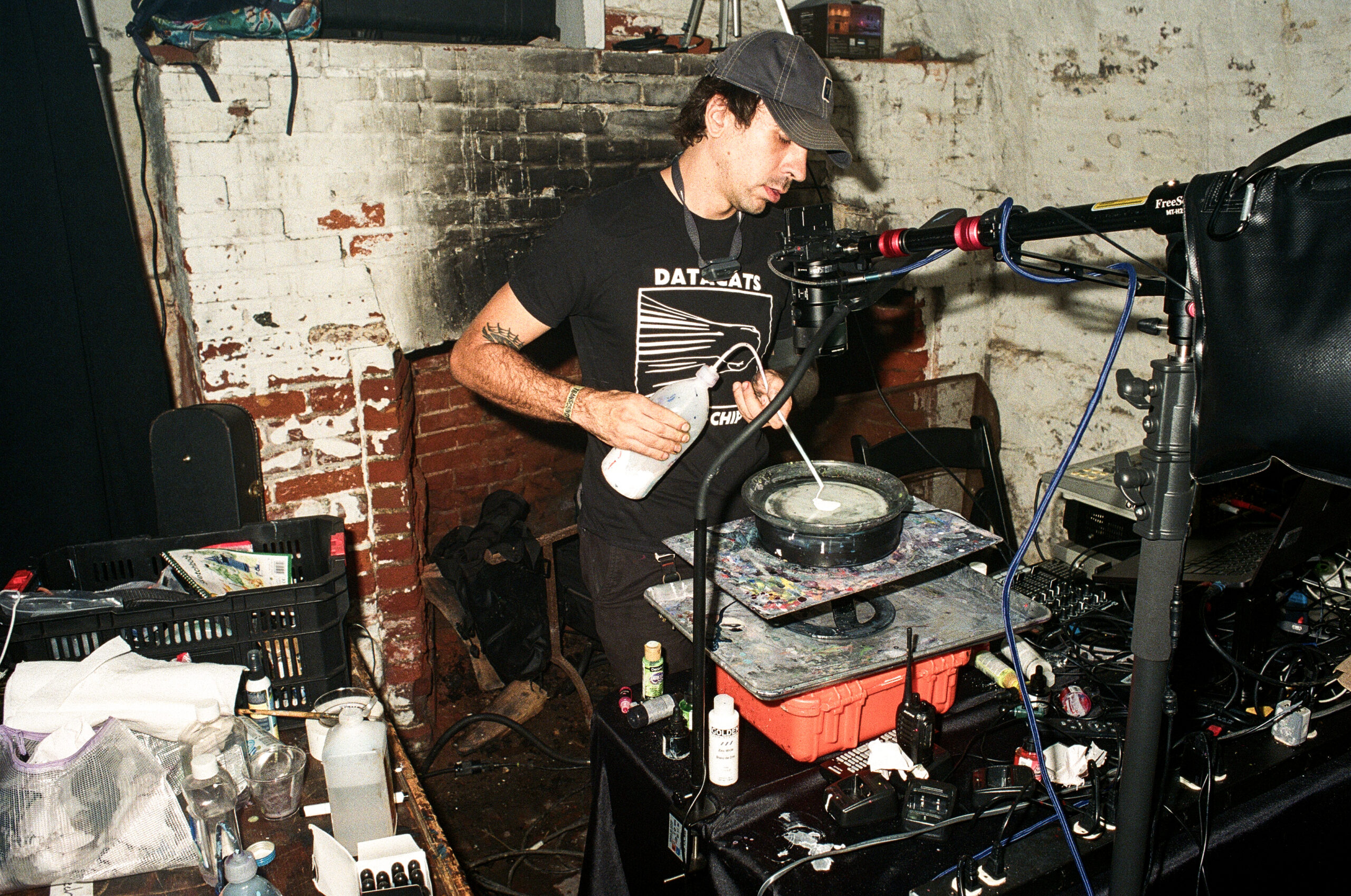
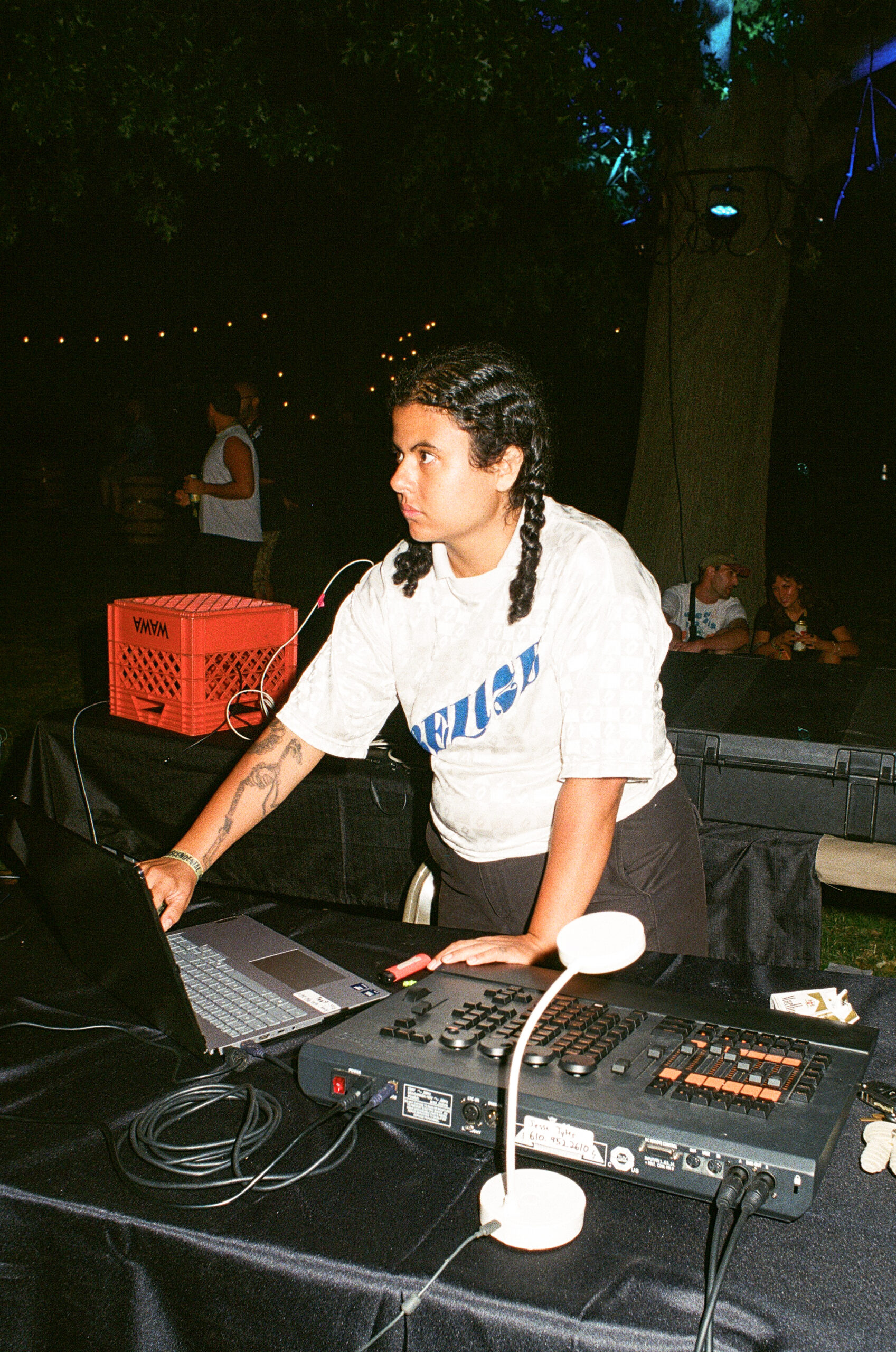
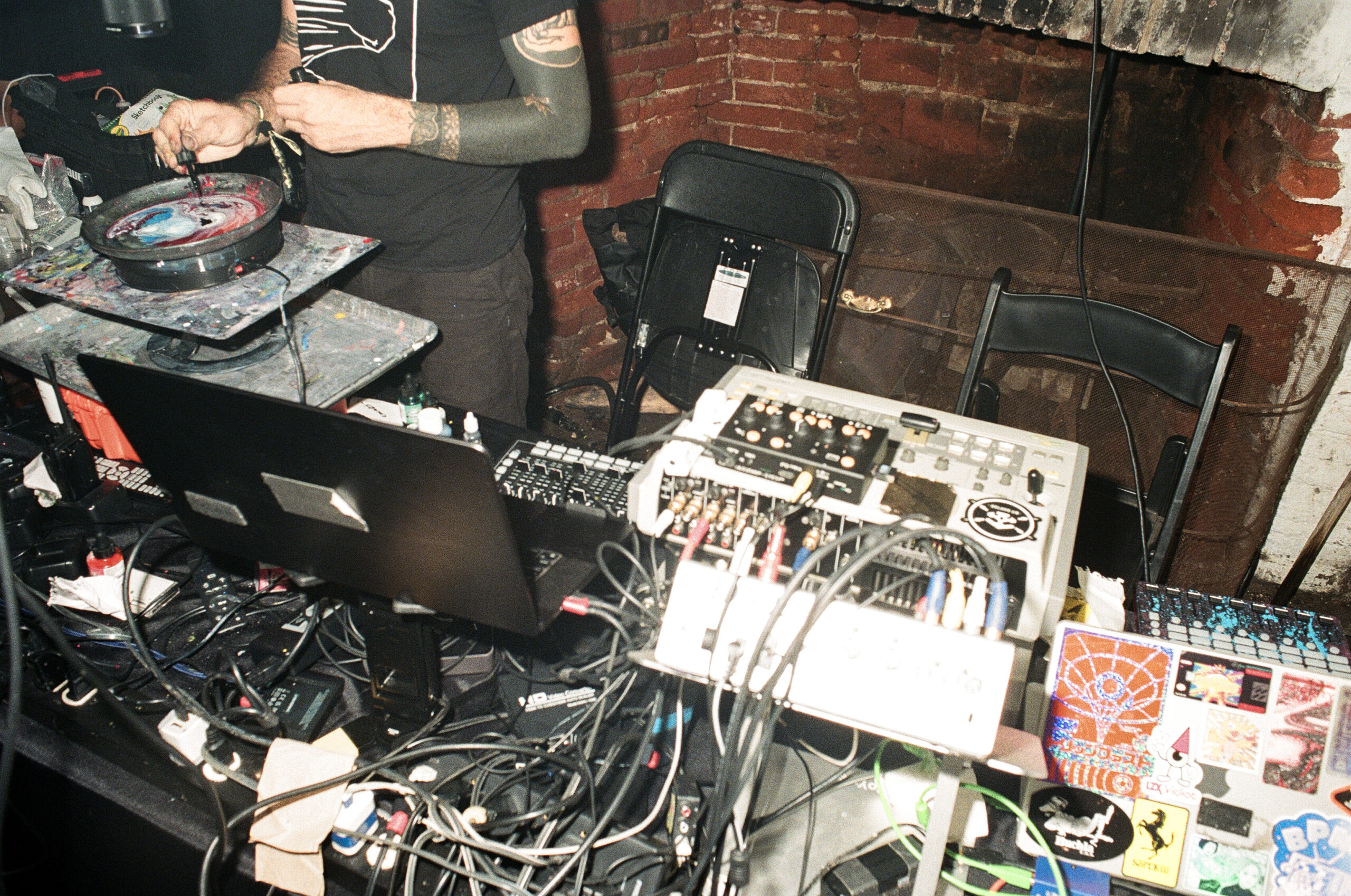
The crew worked until 6 a.m. Thursday to get everything show-ready. But once the festival opened, the people he’d put in charge of each area could take over.
“It worked really fucking well,” Morales said.
Option 5 was one place that certainly played out—the stage sits on the fort’s southern front, between the moat and the river. Leggett and Black were working lights there throughout the weekend.
Friday, as Leggett put it, “brought all the kinks in the lighting programming to the surface.”
DJ Godfather was part of that baptism by fire. “Lighting pace follows the DJ’s mixing pace, not just the BPM of the music, and Godfather had it up as high as it could go,” Leggett joked.
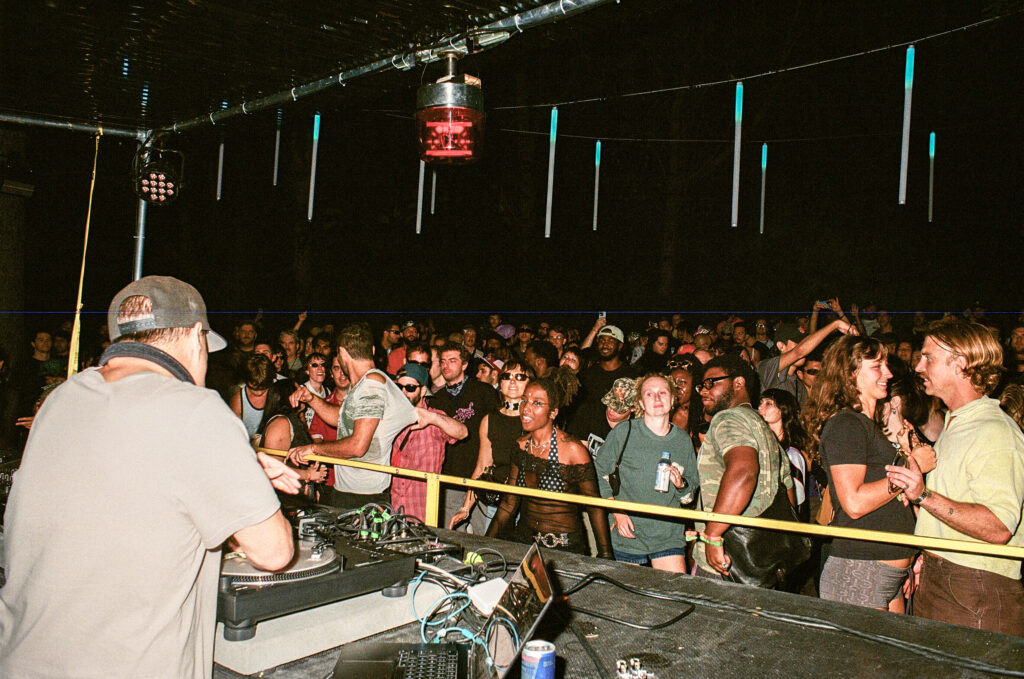
After spending Saturday afternoon working out kinks, things were clicking by the time RHR b2b Cashu closed out the night.
“[Vivian and I] entered this flow state where their bass-boosted, hyper-futuristic sound, the blasting pockets of color and darkness, the sea of dancers in the mystic swamp all fully snapped into place,” Leggett said.
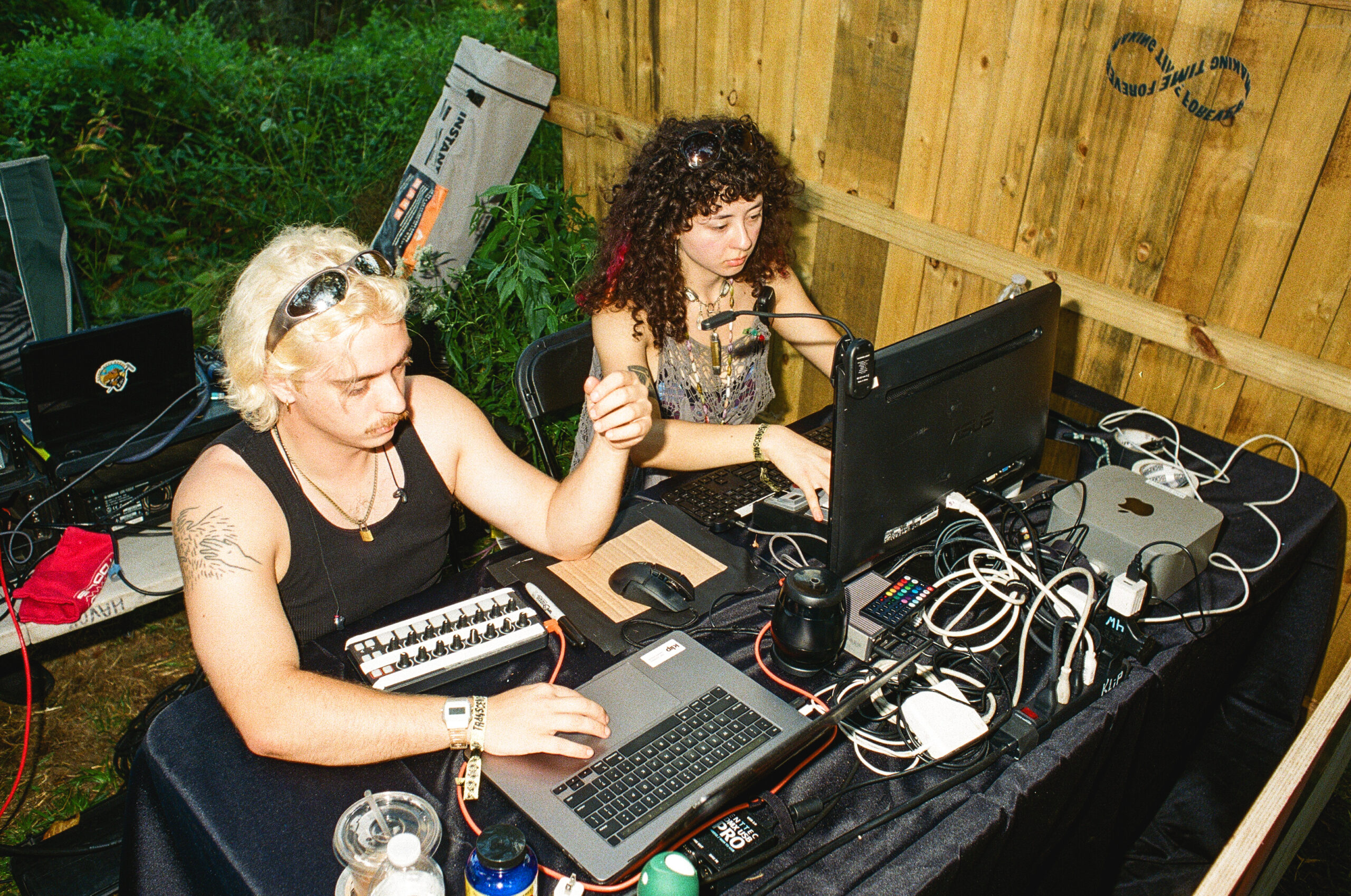
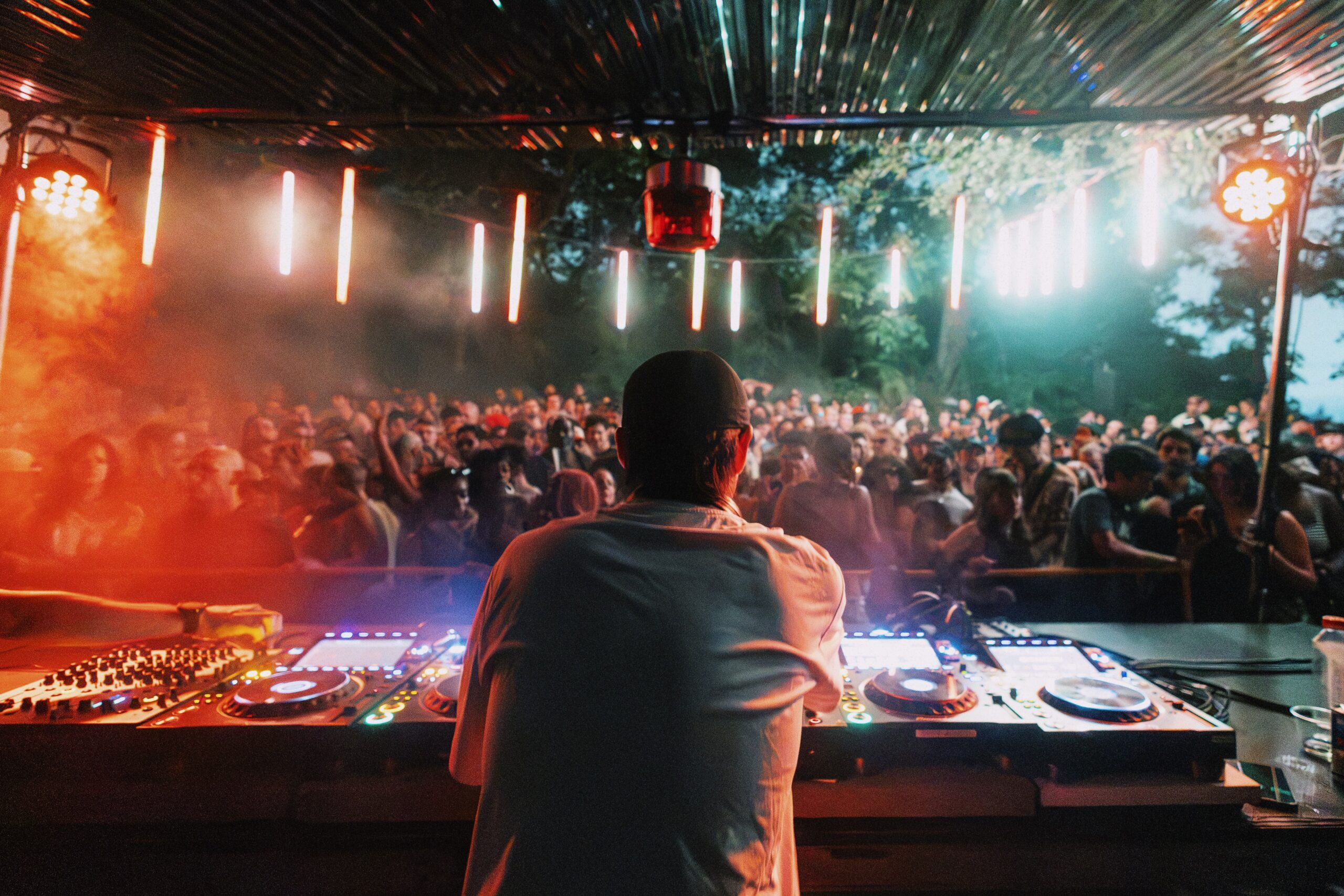
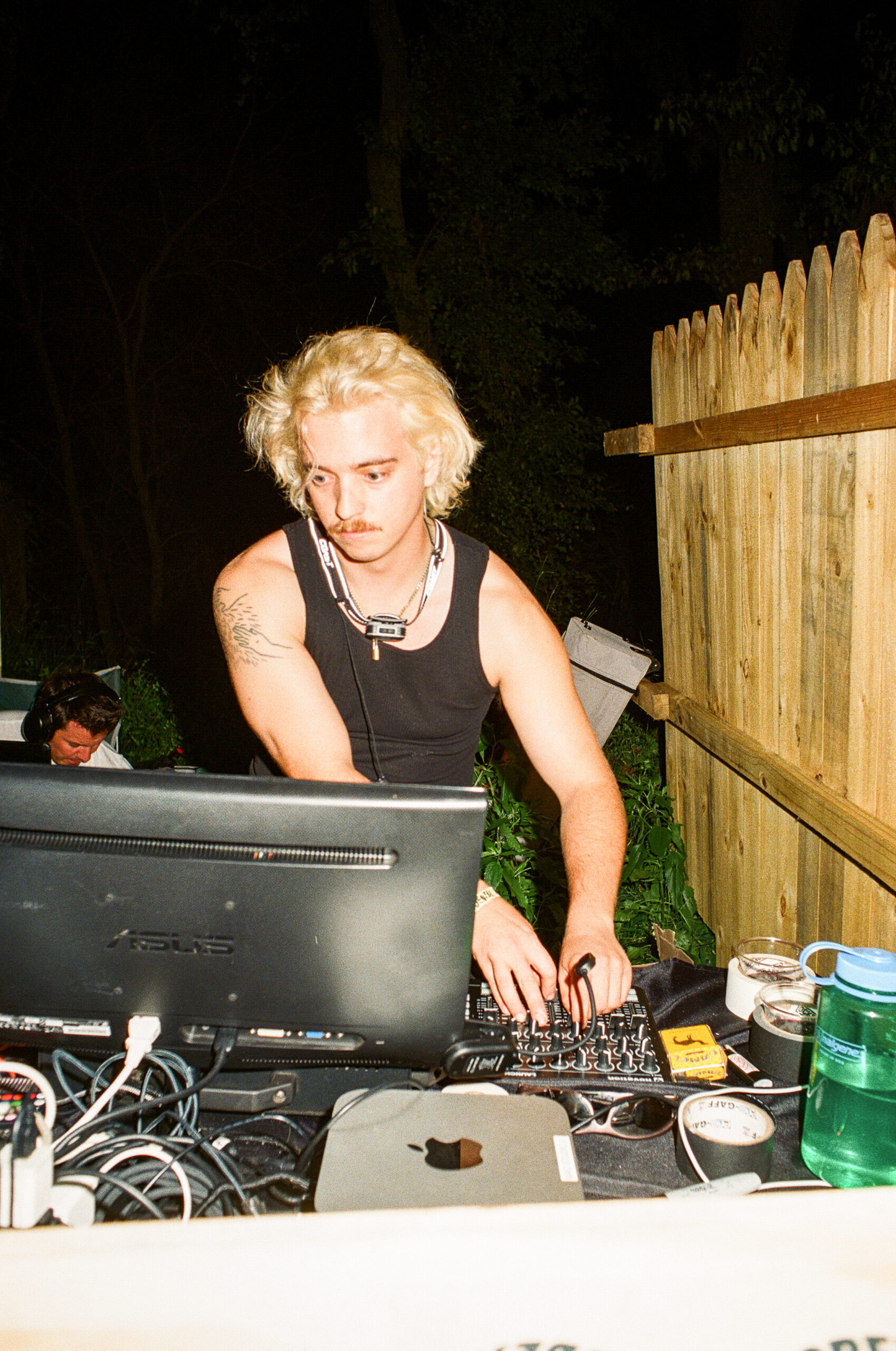
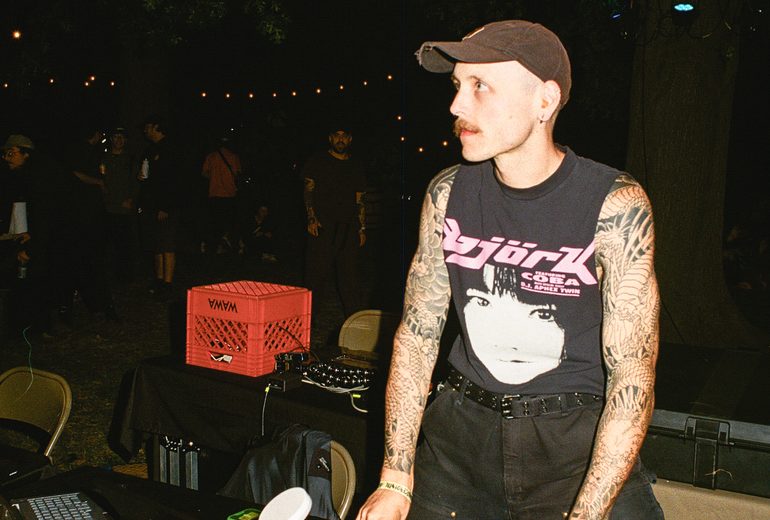
Bouviere described the festival operation as “truly by committee. “Just a bunch of people, masters of their craft, busting their asses to make it happen,” he said.
On the third night of Making Time ∞, I watched the Citadel begin to light up as the sun went down. By then, the fort was doing what Klip spent days preparing it for. The paths were lit, the stages were moving with the music, and projections were working their way across buildings and other surfaces throughout the grounds.
Morales’ visual library is years deep, with recurring images like checkerboards and animated eyes alongside footage he’s collected while traveling. There’s a bullet train in Japan, a cable car in Mexico City, boats moving through Bangkok, and drone footage of Philadelphia’s Wissahickon. What gets used depends on what’s happening in the music. Morales compares it to a DJ choosing a record: the material is already there, but the timing is everything.
When lighting, Morales pays attention to how a DJ builds a set, looking for moments when the lights can respond. A breakdown might mean a blackout. When the track comes back in, the lights come with it.
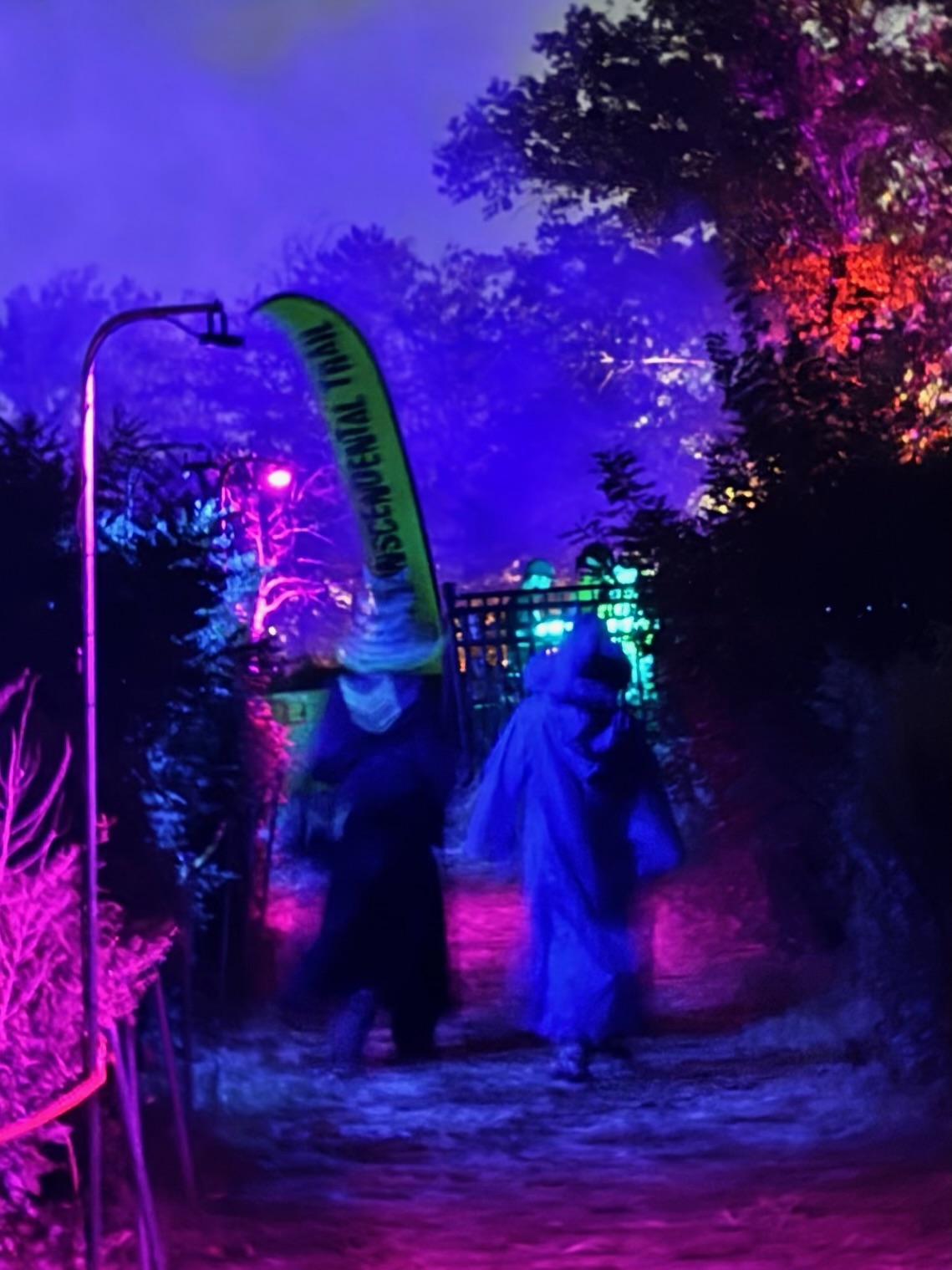
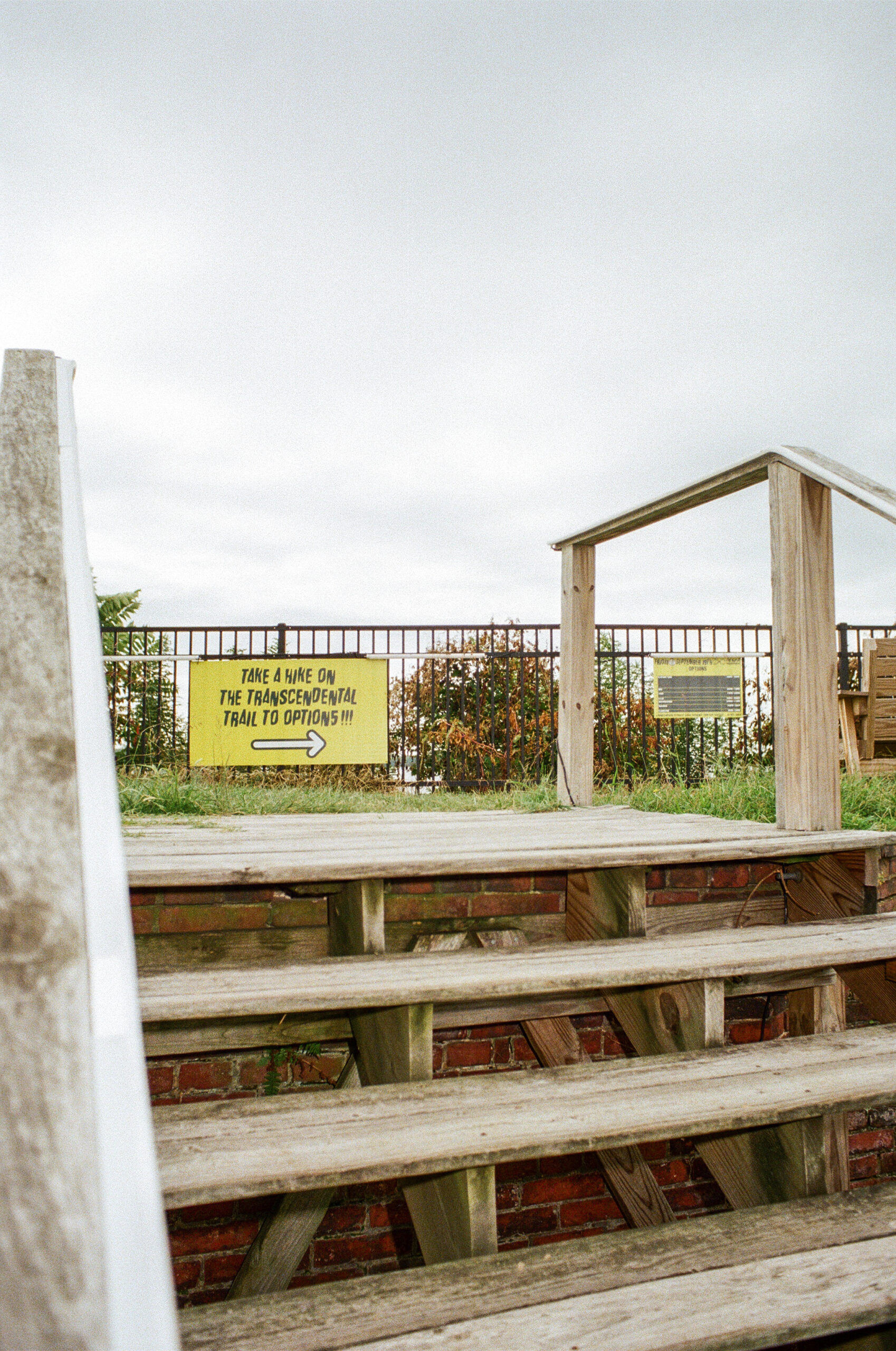
After five years at Fort Mifflin, Morales knows the place well enough to understand what each part can do. That familiarity also meant he could finally step back.
His favorite moment came during the final three hours on Sunday. Dave P told him to walk around and take it all in. Morales grabbed a martini from Meeting House and wandered through the grounds, taking in the festival as it ran around him.
By Sunday night, he was on the dance floor with Barbieri, Dave P, KCRW’s Mario Cotto, and friends while Daphni played “Born Slippy,” with champagne and rain coming down around them.
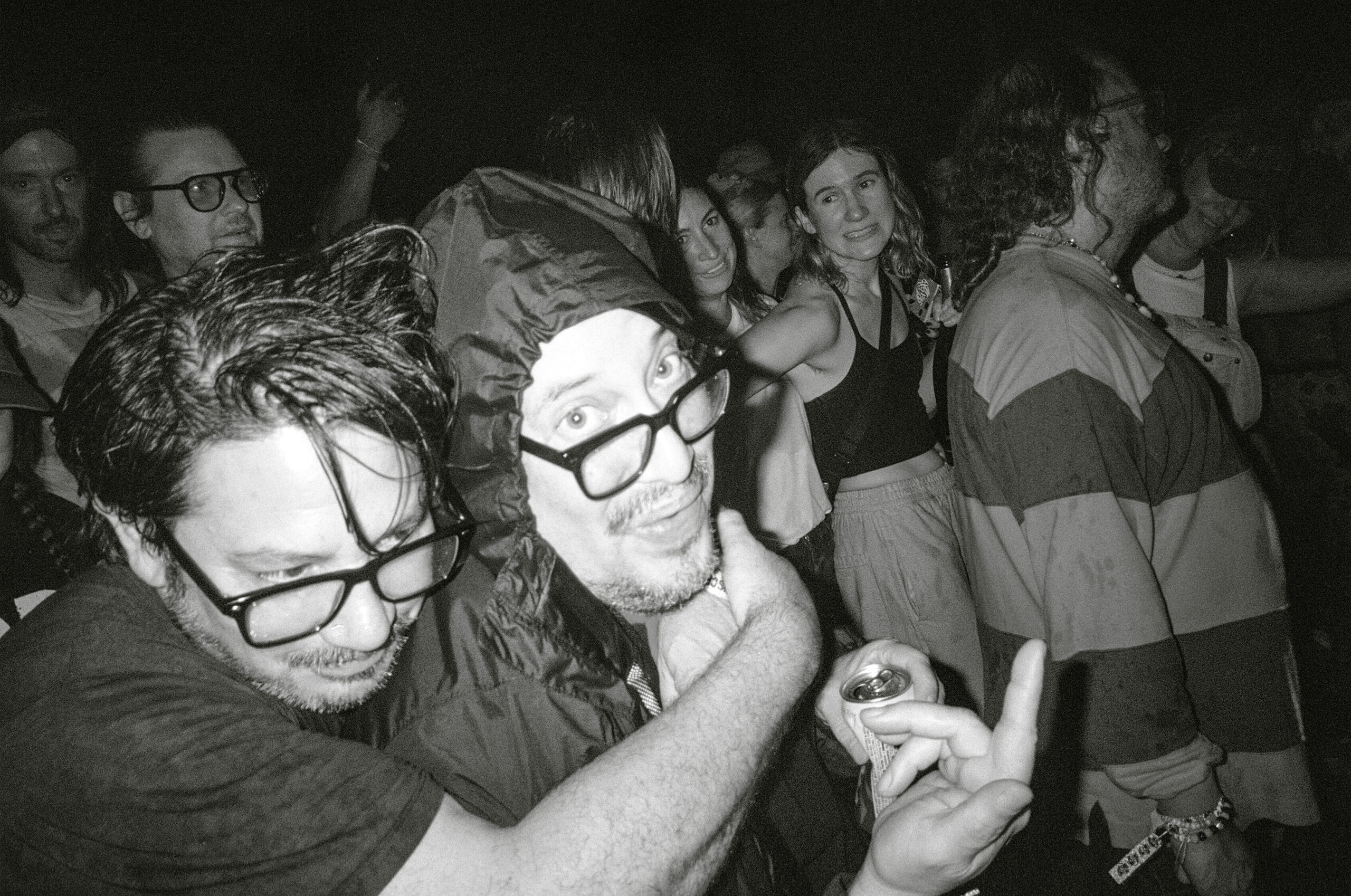
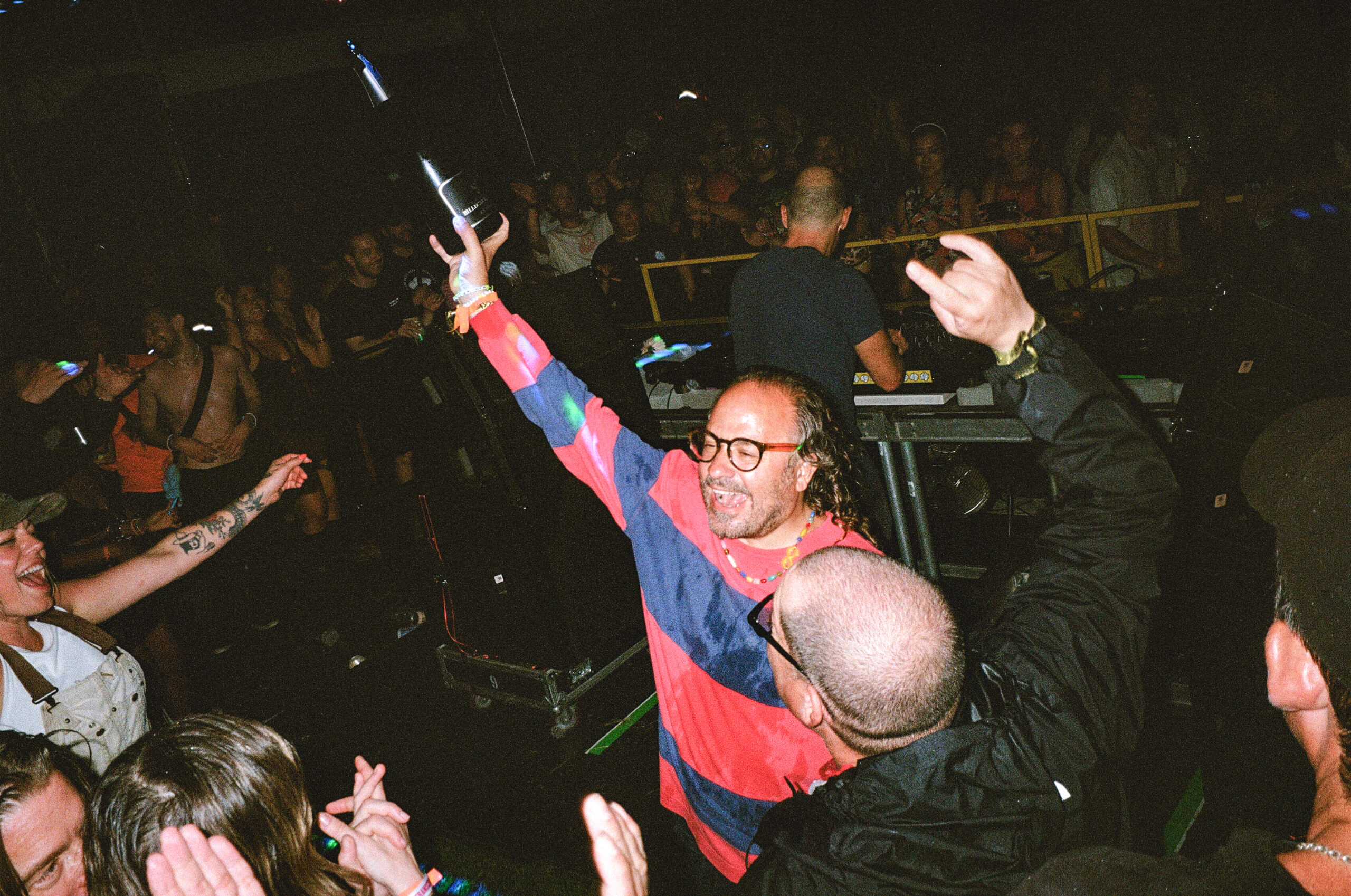
It was a different position for Morales after years of building Klip’s operation at Fort Mifflin. He had spent the weekend making sure the pieces were in place. Now he could walk around and see what everyone else had done with them.
“The engine was humming,” he said.