
How This Is Lorelei gave old songs a new life on ‘Holo Boy’
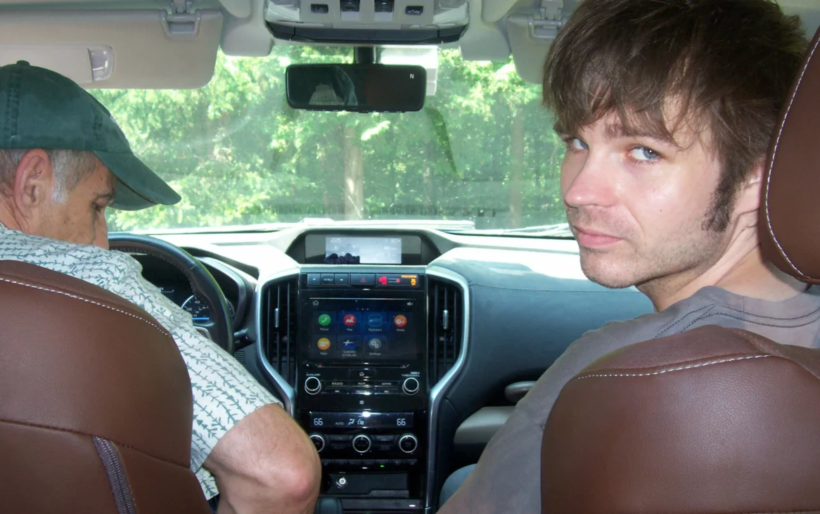
Nate Amos has built a career on speed. The Vermont-born musician and producer, who performs as This Is Lorelei, writes quickly, records constantly and trusts his instinct every step of the way.
But for his latest studio album, Amos wanted to take a pause and look back.
Holo Boy is a collection of re-recorded songs from his sprawling discography, which includes more than 30 EPs and an eclectic debut album called Box for Buddy, Box for Star.
“So the idea of taking a group of songs written over a really long period of time and flipping the process so that you’re trying to produce it and record it in a way that it all gets glued together,” he says, “It just seemed like fun.”
The title track was originally recorded in 2015 in Chicago, where Amos relocated in his early 20s and where This Is Lorelei was born.
“ I lived in a basement with my friend Mark,” Amos says. “We had turned it into two bedrooms and a practice room by hanging blankets from the ceiling with thumbtacks … We had kind of like a pact to make a certain amount of music each month. That’s kind of all I had going on.”
A decade later, the song sounds different. His voice sits lower, and it sounds steadier.
“I’ve just sung so much more at this point,” he says. “I’ve gotten more comfortable singing.”
In today’s session, Amos talks about making Holo Boy, how Cher inspired his breakout hit, “Dancing in the Club,” and why every song he writes is either a bluegrass tune or a lullaby.
Interview Highlights
On writing bad songs
”You have to write the bad songs too because, at least for me, if I’m stuck on a song that I know isn’t good, I either have to see it through to the end or I have to delete all traces of it from my computer and do my best to just forget about it.
“A lot of the time if I do that, it ends up haunting me, and I just end up remaking it and then I still know it’s bad, but I still have to do it anyways. So you have to write and make the bad songs too, just to get rid of them. Then you worry about what to do with it later. But it’s gotta be done.”
On only writing lullabies or bluegrass songs
”It’s more a question of intent. A lullaby being a song of intended comfort, I guess, and a bluegrass song being anything else. That’s mostly just because I grew up surrounded by bluegrass music, and there’s a very particular quality to melody and bluegrass that I think is just kind of more deeply ingrained in my brain than anything else.
“The mark of a perfect song is it working well in any genre that you throw at it. The more different ways a song can still function at, like, a core level, the better a song you’ve written.”
On having “Dancing in the Club” covered by other artists
“That’s kind of an incredible thing to see because, as a writer, that’s kind of the dream is to see one of your songs leave the nest and go up and have, like, a life of its own and function.
“Again, going back to the thing where, like, if a song works in a bunch of different genres, that’s the mark of a good song. Seeing a song go off into the world and kind of continue to live on its own without being attached to your own version of it is the most gratifying possible thing as a writer, I think.”
This episode of World Cafe was produced and edited by Miguel Perez. Our senior producer is Kimberly Junod and our engineer is Chris Williams. Our programming and booking coordinator is Chelsea Johnson and our line producer is Will Loftus.