
Meet The Man Tracking The Greatest Cover Songs In The Universe
A Q&A with Ray Padgett of Cover Me

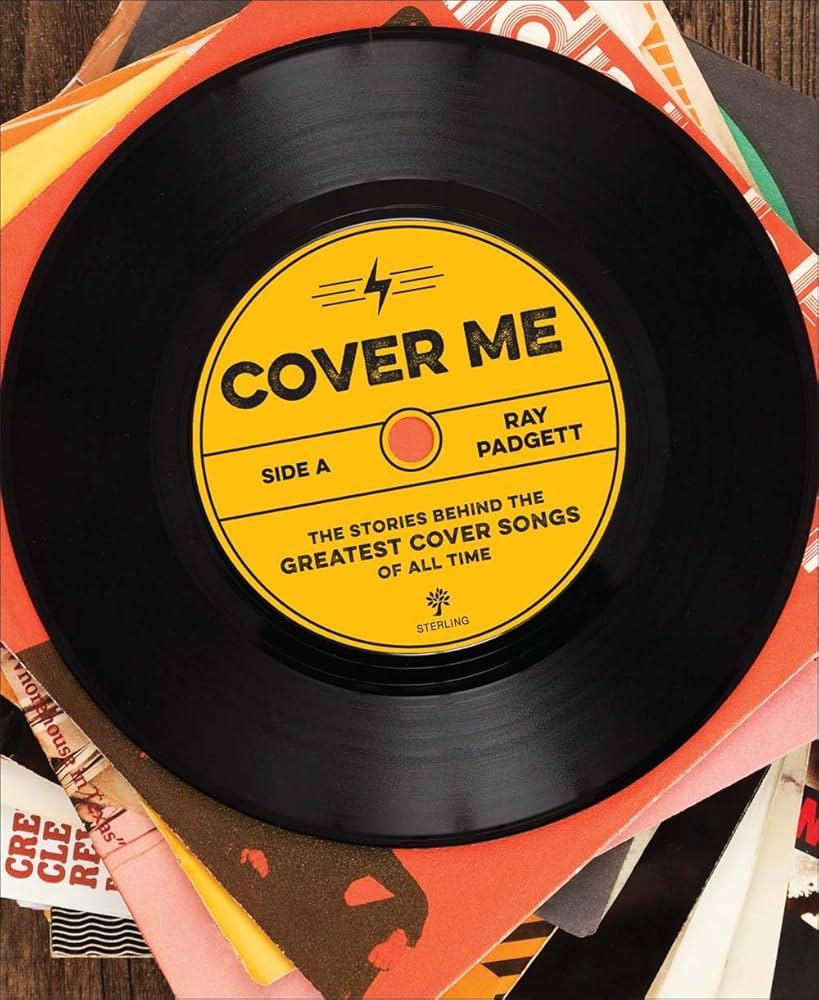
Ray Padgett is a music writer and publicist, but he’s also the NORAD Santa tracker equivalent of cover songs. His dedication to the project is truly impressive. As a writer, he’s the author of Various Artists’ I’m Your Fan: The Songs of Leonard Cohen and Pledging My Time: Conversations with Bob Dylan Band Members, as well as Cover Me: The Stories Behind the Greatest Cover Songs of All Time — the book begat from his blog of the same name. Since 2007, from his perch in Burlington, Vermont, Ray has been tracking cover songs as they’ve trickled out into the world. During that time, how those songs have been released has changed just as much as how they’re perceived, and how very many of them are coming out, seemingly every day. We chatted with him and got deep into the weeds of all things cover songs.
Joey Sweeney: How did you first get so immersed in the world of covers?
Ray Padgett: I was in my freshman year, and a big Bob Dylan fan. Still am. At the time, he had this radio show on XM radio called Theme Time Radio Hour — the conceit was that each show was like a theme, right? So he would do dogs or shoes or whatever. One of them was Summer. And he played a version of the Gershwin song “Summertime” by Billy Stewart.
And I knew Summertime. I’d heard it. It’s a famous song, but every version I sort of had heard, I think, was kind of slow and languid and sleepy. And the Billy Stewart version, if anyone hasn’t heard it, is fast and they’re scatting and there’s drum solos and it just is so uptempo. It’s the soul version from the 60s. Amazing. And I remember hearing that and thinking, you know, I didn’t know you could do this to a song.
I didn’t know you could take a lyric and the basic melody and essentially change everything else about it. And so I thought, I wonder what other covers, what other songs do this. And, you know, that was sort of like I fell down the rabbit hole. That was 16, 17 years ago. I just got fascinated with that idea of changing or taking a song, using usually the same lyrics and changing almost everything else.
JS: Between your book, your blog, and your Substacks, you’re thinking about covers all the time. Over the years, have you landed on any criteria for what makes a great cover?
RP: Yes and no. The way I think about it is: I flip it a bit and say, what makes a bad cover? And there’s one broad criteria of what I would call a bad cover, which is a cover that doesn’t change anything. Right? The baseline for a good cover is you’ve got to change something. “Make it your own” is a phrase that gets thrown around a lot.
You can still change something and have it not be good obviously, but I would say the absolute baseline is: If you’re literally trying to recreate every single element of the original, that may be an interesting exercise for an artist’s artistic growth or something, but as a listener, you know, why wouldn’t I just go listen to the original? So to me, that’s where it starts is to change something and then go from there.
JS: I grew up in a pretty snooty indie rock world where being in a cover band was the worst thing you could do. Cover bands were seen as cheesy and uncool. Do you think that reputation comes from the fact that so many of them don’t really change anything?
RP: Yeah, I’m sure that’s true. I mean, many of them go so far as to wear the outfits — I remember when I was in elementary school, maybe my parents took me to some local Beatles cover band and like they had the wigs and the Sergeant Pepper jackets and I think they were calling themselves John and Ringo and so on. It’s not the sort of thing I would write extensively about. What I think is sort of artistically interesting about covers is the opposite — is the people who are not literally trying to pretend they’re John Paul George and Ringo, but are taking those songs and doing something unique with them.
JS: At the same time, it feels like the idea of the cover band has evolved a bit — like Michael Shannon’s R.E.M. band, or here in Philly, a Grateful Dead cover band called Friends of Jerry that takes wild liberties with the source material.
RP: I do think, you know, those tend to be a little more interesting. And there’s also, speaking of cover bands maybe evolving a little bit, there’s a sort of subgenre that’s interesting genre-crossing cover bands.There’s some group here that mashes up like Phish and Radiohead or something. So, you know, there are these cover bands that are not just doing entirely faithful recreations.
JS: Zooming out a bit: Before the last hundred years or so, you could almost say all songs were cover songs, given how folk and popular music circulated. Do you think covers are basically folk music in the making — a first step toward a song becoming a standard?
RP: Yeah, that’s an interesting framing. I think there’s something to that. I mean, if you think of, again, I’m a Dylan person and he’s a great example of the cover song. All of his big hits essentially are more famous from cover songs than anyone else, right? That goes back to the ‘60s. “Blowin’ in the Wind”: bigger hit for Peter, Paul, and Mary than it was for him. But even more recently, you know, when you’re talking about sort of the folk tradition, “Make You Feel My Love” was not a hit at all for Bob Dylan. It became a pretty big hit for Garth Brooks and Billy Joel, an even bigger hit for Adele. And then has gone on to be covered, you know, like it was on American Idol a gajillion times. People are posting videos on YouTube every 5 seconds. Many of whom I’m sure don’t even know it’s a Bob Dylan song. It’s like a standard, you know, not even a folk standard or like an American song book standard — that the guy only wrote in the 90s. The fact that it’s by Bob Dylan is almost incidental to that song’s journey. And I think that can only happen through covers.
JS: Other than popularity, what do you think a song gains when it gets passed from hand to hand like that?
RP: That’s a great question. One criteria of a great song to me is its malleability — that it’s not only good with this exact performance and this exact production and this exact instrumentation and it falls apart immediately if you take any one of those elements out, right? That it can be done as a great song, you know, maybe it’s a great pop song or something and then someone does a bluegrass version and that rules and someone does a metal version and that rules and someone does a hip-hop version and then that rules. The sort of versatility of a song like that, I think it just makes the composition that much more impressive, like the bones are so solid that you can put them in all these different contexts and the song will hold up.
JS: What’s the difference between the allure of a cover song for an artist and the allure for a listener?
RP: There’s differences and there’s overlaps. Starting from the artist’s perspective, what song they are covering [matters] because there can be different reasons behind it. One, and this you see a lot, is to expose your audience to an influence, or to show the appeal of an artist who’s lesser known. You know, an artist basically who covers someone more obscure than them. That’s a fairly standard mode of cover song, and then it’s just to sort of show where you came from or just turn your audience on to cool music.
That’s one half. Or the other half is you cover a very famous song.You cover the Beatles, who we’ve mentioned a few times, or Dylan or whoever. Chappell Roan’s getting covered every five seconds these days, you know, and that can be any number of reasons. It can be just because it’s fun. It can be to make it into your own style. It can be more sort of mercenary and to try to get some of that artist’s audience — you know, artistic purity is the only reason anyone does a cover song. From the audience’s perspective, people are more into covers of songs they already know. If you’re a super fan of a band, you are interested in their influences. I mean, that’s what the music nerds among us like. So, even if a band’s covering someone you’ve never heard of, you might say, “Well, I love this band. Let me check it out.” You know, maybe you’ll find a new favorite song. Anyone who listens to covers often enough, that certainly happens, too.
JS: You’re getting at something I think about a lot: I wish there were more artists like Cat Power, who really found her footing as a master interpreter of other people’s songs. There’s something noble and cool about that — she approaches everything in that “make it your own” way you’re talking about.
RP: Yeah, it’s interesting that someone like her, right, she has two things she can do: She’s this amazing interpreter and she’s a great songwriter, right? It feels like she sort of gets the credit for the interpretations because we know she can also write great songs.
I always feel that the sort of elevation of the songwriter has come to such a ridiculous degree, that if you can’t write your own songs, you’re not a worthy artist — at least in popular music. More broadly, it’s not a thing in jazz, but in terms of rock, in terms of indie rock, in terms of pop, it’s like a knock on your credibility if you’re not Taylor Swift. writing your own songs. Whereas someone who can just interpret songs brilliantly — I mean that was how so many people in the ‘40s, ’50s even ‘60s came up — and then that was sort of lost. But Cat Powers is an example of this as well, where she’ll just draw from all the songs she knows, whether it’s the Rolling Stones and it’s some massively huge song that every single listener is going to know and be like, “Wow, that sounds totally different.”