
Q&A: Ted Widmer, The Historian Tasked With Telling The Story Of Wings And Paul McCartney In The 1970s
How this presidential historian made sense of a decade of silly love songs, at-home haircuts, and experiments in woodworking

Wings circa 1972. Photo by Reg Lancaster/Daily Express/Hulton Archive/Getty Images
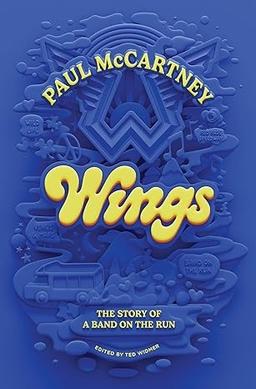
Ted Widmer’s previous gigs have included speechwriter in the Clinton White House, four books on former U.S. presidents and the presidency as a whole, and playing guitar in a high-concept ‘90s rock band called The Upper Crust. These are all tasks marked by their complexity, weaving a lot of threads together to tell a larger story. So it makes good sense that he’d be the guy to edit Paul McCartney’s Wings: The Story of a Band on the Run, the new oral history of a band, a man, and an era that’s often misunderstood. For the book, Ted assembled a history pulled from hundreds of hours of interviews with anyone who had anything to do with Wings, and McCartney in the 1970s, when the former Beatle was reinventing himself in the wake of the breakup that shook the world. It’s a fantastic read, and we were lucky enough to have Widmer himself fill in even more color for us.
Joey Sweeney: I really enjoy the historian’s approach the book has. The way it’s broken up album by album, with timelines of what’s happening with the band and in the world during that timespan. How did you see the group’s output interacting with what was in the news?
Ted Widmer: We knew we were doing a book about a decade as well as the band. There’s roughly one album per year. It’s not perfect, but that’s roughly it, so that actually led to a chapter-by-chapter format, and I just read the lyrics of the songs very closely and saw certain things that were very interesting.
There’s Ireland, of course, about Northern Ireland and the Troubles up there, specifically in February 1972. I thought readers would wanna know a little more, but I did. I’m just a curious person. And then Watergate. There are little references to Watergate in the song “Junior’s Farm,” everybody president, and it’s not like it’s an overt political statement, but it’s there.
JS: I think the book is all that much richer for it by giving that kind of context. It’s generally assumed and understood that The Beatles had a very primary place in the history of their main decade. But to extend that throughline into the Wings era is something that I don’t think I’d ever seen anybody do before. How did it all come together?
TW: Key to it were the interview transcripts for a documentary that’s coming out next year directed by Morgan Neville, who’s done other music films like 20 Feet From Stardom. It was probably like hundreds of thousands of words that were long interviews. I think four or five of them alone were with Paul. So there was this vast trove of stuff about Wings, and I just went in and cut, not literally with scissors, but if a passage worked, I’d cut it out and drop it into the text.
And we understood pretty early we would do a chapter about each album. And a couple of other specialized chapters, like the university tour, when they just got in a van and drove. So I just was going through this vast amount of verbiage to find quotes and dropped them in in a way that felt, and I was looking for honesty and humor and statements of love, and emotion — and there was a lot of it. I quickly figured out as I was getting into the early weeks of this, that this was a pretty powerful personal document that was about someone overcoming adversity and you know, a trauma, the end of The Beatles. The project had these other dimensions of, how do you rebuild your life? You’ve severed relationships with friends, you’ve walked away from your career. How do you handle that? And it began to be a book that touched upon something very important for anybody.
JS: I think what you’re saying is that there’s a tenderness and sincerity to a lot of Paul’s solo and Wings music during the seventies. Do you think that had something to do with the beating they regularly took from critics?
TW: It’s a great question. I mean, there are flashes of anger from now and then too. He’s a fascinating, complicated, deep person, but there was a great deal of love in the lyrics. I think my instinctive answer would be that [the source of that tenderness] was his marriage and his children. He was so happy he found Linda. She comforted him.
He couldn’t even imagine being in a band without her in the center, which was a radical decision. She, no musical experience on keyboards or singing, doing both before large audiences. Wings was obviously his creation, but she was his partner and ally, co-creator for the whole decade. And so that was something I learned was so important to detail.
JS: The book really establishes Linda as a force in the band and gives her her flowers. It was heartening to see other musicians in the band talking about how she grew as a musician, how dedicated she was. Can you talk about the very particular kind of misogyny she faced from a historian’s point of view?
TW: Well, so this was all a great learning experience. I love rock and roll. I listen to all kinds of music, and it hadn’t really occurred to me until I did this that there was a real problem with misogyny. You know, almost all bands of the 1960s, they’re all men. There are a few vocalists here and there, but very few married musicians. Actually in the book, Paul explains that he got the idea from Johnny Cash and June Carter Cash performing together on TV, and that was all it took. He had a vision of him and Linda.
Now, it’s much more common to see bands with women and men together. But it was really unusual at the time and he was slagged a little bit by the press and even Mick Jagger said something negative, like “What’s he doing with his old lady in the band?” He persevered. He didn’t care.
JS: When I look at the photos of them, especially like in the very early part, there’s some iconic style going on there too. Like the fashion, the hair, the clothes are all kind of amazing.
TW: They are. There’s a great quote by Stella McCartney about how her parents were such hippies that they just cut their own hair. They wouldn’t go out to a barber. And you think about the money, a lot of movie stars and musicians, put into their look. And one day Linda just decided she liked the way Bowie looked and she gave herself the Bowie haircut and it, you know, they just were fearless.
JS: What was the most surprising thing you learned? What stopped you and made you think, wow, I didn’t know this?
TW: I think the intensity of the crisis at the beginning of the book, the crisis coming from the breakup of the Beatles, and how down he was. I don’t think of Paul McCartney as being depressed. There’s an optimism in the music, but the breakup was devastating for reasons relating to that, and the extra pain of being the villain as portrayed in the media, that he caused it. So he’s really down in depression, and there are really humble stories that I love about him just figuring out how to build things. He hardly has any furniture, they’re living on a piece of property that he never went to. And so there’s, there are comforts and he’s gotta chop down a Christmas tree. No one’s gonna deliver anything to where he is, and so he has to make something as simple as a table.
JS: It’s funny how today that whole period would’ve been on Instagram, but the public version of who that band was was completely different. In 1975, who is the Wings fan? What’s the demographic?
TW: By ‘75, I think you’re getting very large numbers. There’s still very big AM radio hits. Also, the Beatles are having a comeback in the US mid-seventies. The “red” and “blue” greatest hits albums were huge, huge in my life. They were my second and third Beatles albums, and they just were so overwhelming. So it’s a lot of younger people, like 12 and 13, 16 year olds are really getting into Wings in the mid-seventies.
JS: Say you’re at a party talking with a solo Paul/Wings doubter. What’s your convincer in the case for Wings?
TW: I’d say just give the music a serious listen — it’s beautiful, intricate, complicated music, beautiful melodies, beautiful harmonies between Paul and Linda. Great instrumentation. There’s also almost as much change from album to album as The Beatles showed. There’s looks into politics; there’s a view into how family comes into the songs and how unusual it was for two parents to be making serious rock in their thirties.