
XPN Honors Lilith Fair On International Women’s Day
Hear Sheryl Crow, Fiona Apple, and Tracy Chapman to celebrate the day. And our hosts reminisce about the festival’s impact.
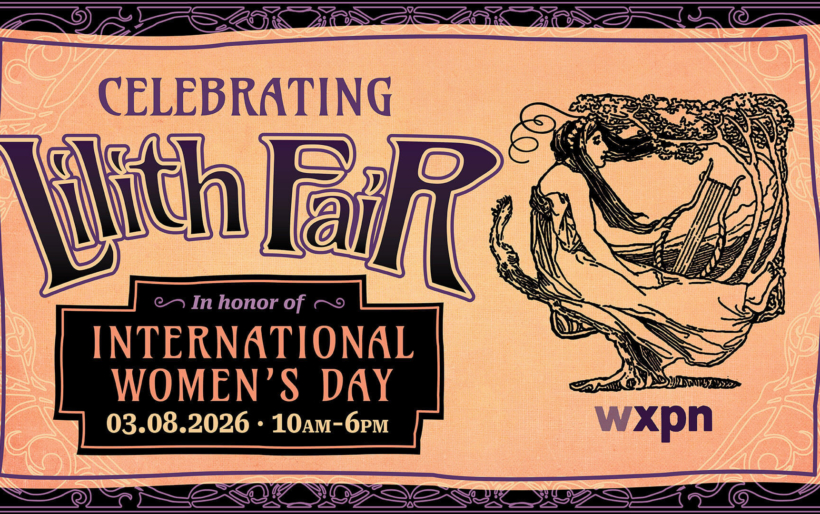
Sunday, March 8 is International Women’s Day, and XPN is marking the occasion with a full day of music from Lilith Fair, the revolutionary all-female festival that changed the industry in the late ’90s. We’ll be playing artists like Sarah McLachlan, Fiona Apple, Emmylou Harris, Sheryl Crow, Tracy Chapman, Indigo Girls, Patty Griffin, and more.
Ahead of Sunday’s tribute, we asked our hosts what Lilith Fair meant to them, and how the festival shaped the way they hear music today. Read what they had to say below.
David Dye – 10 a.m. to Noon
I am honored that Dave’s World is part of the WXPN International Women’s Day Celebration. Lilith Fair encompassed the 90s singer-songwriter ethos of XPN at the time, perhaps too well. If there were criticisms about the initial 1997 line-up, it waster the lack of racial and international diversity. That was why I was so happy that a then new artist Lhasa De Sela was included. Her father was a Mexican academic and the footloose family traveled between Mexico, Canada and the US frequently. Her first album that came out in Lilith Fair’s debut years 1997 was called La Llorona. It was based on the Mexican folk-tale, La Llorona, that her father taught her. She toured with Lilith, made two more albums, then traveled with a French Canadian circus troupe. A multi-cultural, multi-lingual bohemian to the end. Unfortunately her journey was cut short by breast cancer and she died in 2010. “De Cara Ala Pared” is the beautiful song that began her debut album.
Wendy Rollins – Noon to 2 p.m.
I was at the first Lilith Fair in Atlanta and I definitely remember from the moment I got to the parking lot, the mood was different. There were women everywhere. It’s like we had all been waiting for a time when we could own the day. In the lines to get in, women were talking with strangers, walking to their seats, laughing, and when the music started, they were dancing. Zero inhibitions. I don’t know if people realize concert culture (particularly in the 90s) was/is not always welcoming to women. To be honest, I hadn’t even noticed it myself until I was at Lilith Fair.
But in terms of performers, for me it was Fiona Apple. She was closer to my age and she always had a bit of a darker energy. She absolutely nailed it live.
I feel like seeing all those women on stage, and the supporters in the audience, showed me that women have a place in the music industry. I was just getting started at that time and it was encouraging to see what was possible.
Kristen Kurtis – 2 p.m. to 4 p.m.
Of all the artists who played Lilith Fair — which I sadly did not get to attend — Fiona Apple is by far my favorite. Her throaty voice, carefully crafted poetry-turned-lyrics, and percussive piano-driven music has gotten me through some of the darkest times in my life. I’ve been able to channel a lot of grief and rage through her albums, which always seem to arrive at exactly the right time; like how, after a seven-year wait, she provided the perfect soundtrack for our seclusion during the pandemic with Fetch the Bolt Cutters. One of the first songs in her discography that gave me a great deal of comfort was “Sullen Girl” from Tidal. I still get swept away every single time I hear it.
Amber Miller – 4 p.m. to 6 p.m.
Sarah McLachlan was the headliner at the first concert I ever attended (a year before Lilith Fair began) and her album “Fumbling Towards Ecstasy” was one of my first favorite albums…so I’m looking very forward to highlighting a bunch of her music, as well as celebrating the major cultural touchpoint that was Lilith Fair!
Raina Douris – Host of World Cafe
Shortly after the release of the new Lilith Fair Documentary, I spoke to Sarah McLachlan for World Cafe, and we talked about her motivation to start the festival back in the 90s. She talked about the music industry being siloed, about women not getting radio play and festival slots — and how when she proposed putting together an all-woman concert bill — she was told by people in the music industry that there’s no way it would ever work. That last bit, being told “no,” really lit the fire in her… she started Lilith Fair, and proved them all extremely wrong. An inspiration!