

Drexel alums’ record label offers pragmatism to local artists
Tiny Kick Records wants to let artists be artists while they handle the marketing, commerce, and all the other not-so-fun parts of the music industry.
In 2026, artists are essentially required to spend their time (and sometimes money) promoting their work on social media. That can detract from their art and also force them to engage with an industry that’s increasingly hostile to artists, constantly shifting goalposts, and littered with bad actors and bots.
So if you’re an up-and-coming musician or band in Philly who wants to release your music while avoiding the mud wrestling pit that is social media, Tiny Kick Records might be the label for you.
Founded by Drexel music industry program alums Willem Cousineau and Theo Rosenberg, Tiny Kick aims to give rising local artists the tools they need to succeed while allowing them to focus on what they do best: making music.
“ I think a lot of what we’re trying to do is provide some sort of infrastructure,” Rosenberg said. “ Project management is a big part of what we’re hoping to do.”
Both Rosenberg and Cousineau said artists often want someone telling them how to navigate the music industry’s many aspects, and—in addition to recording, mixing, mastering, and releasing music—Tiny Kick wants to give artists just that.
“We’re building a small team where we can just give people some guidance, some goals, and planning,” Rosenberg said.
“ In Philly there definitely are amazing acts who kind of blow up and progress out of Philly, but a lot of them have money and time on their side,” Cousineau said. “That’s not a knock on them; they’re incredible musicians. Our corner of the scene is really young and does not have a lot of time or money.”
Without those two crucial resources, artists are often forced into an ultimatum: focus on the art, or focus on the commerce.
”When you have so much in your day-to-day life to consider pragmatically, so much to juggle just with existing, it’s hard to bring that same level of pragmatism and executive function into your art-making practice,” Cousineau said.
”What we’re trying to do is get the music heard by a larger audience, and it’s kind of impossible to do that without presenting yourself online,” Rosenberg said. “We both just agreed that it’s a hell of a lot easier to have somebody else do that for you.”
That’s where Cousineau’s work as a videographer in social media marketing comes into play.
“I have a lot of the requisite skills to give a name to this scene and help my friends mainly do the part of recording and actually finishing high-quality records, which is something that I really love doing,” he said.
The flip side of that is the “kind of drudgery of promotion and bookkeeping,” facets of the industry Cousineau admits are not his favorites.
“It’s not something that I’m as passionate about, but it’s all that is offset by my passion for the community and for their work,” he said.
The duo, who’ve been making music separately and together for years, want Tiny Kick to be less focused on specific genres and more centered on “a curation of voices and perspectives” that are intuitive to them.
“ We have a really shared understanding of what fits and what might not,” Cousineau said
Each of their solo projects, Cousineau’s Keepsake 1 Million and Rosenberg’s Birdsear, are on the label, as are Foreland Basin, Hopeless Semantic, Assembly Body Opera, and Wherever You Are.
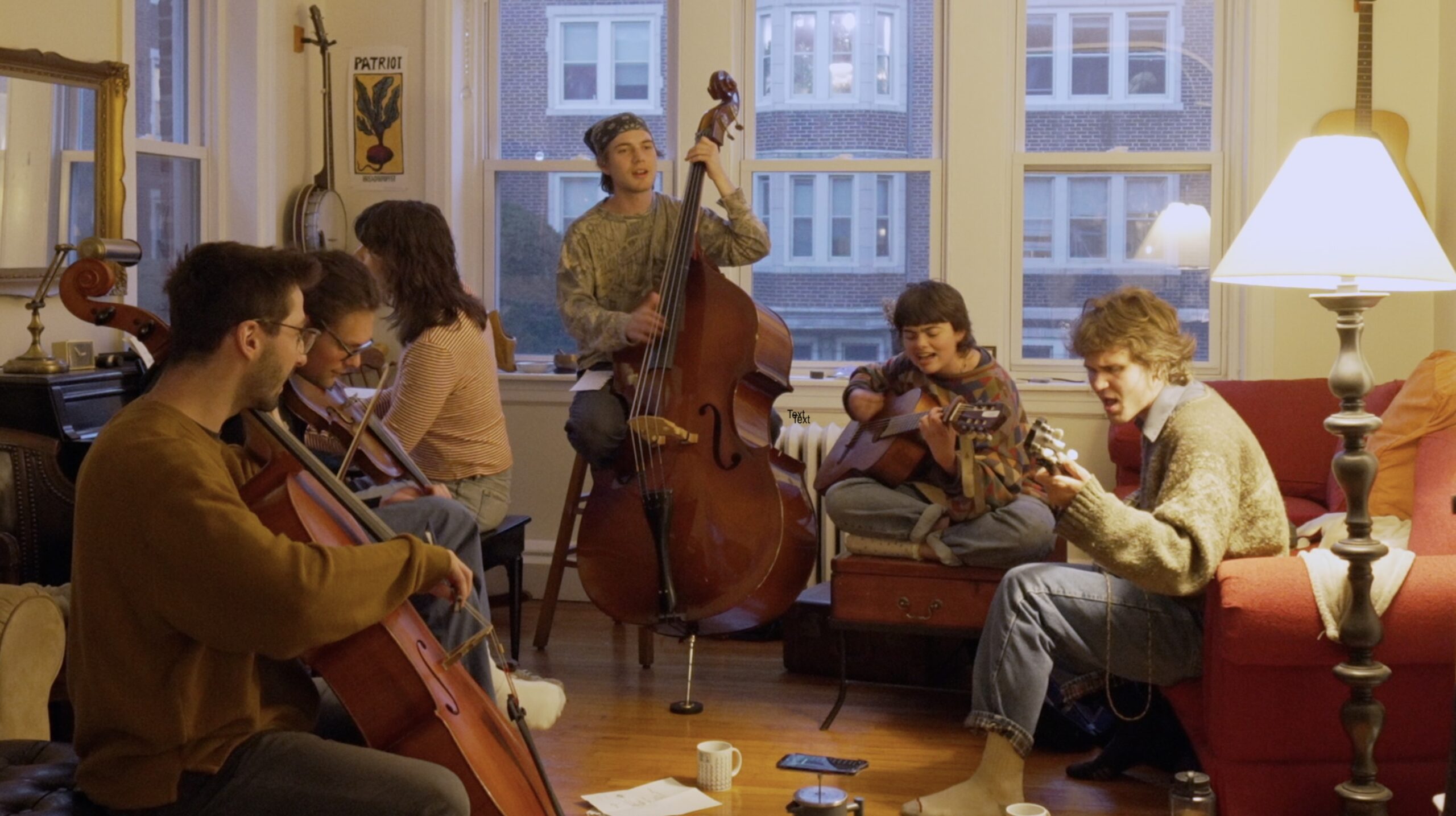
These artists record in various places, but much of Tiny Kick artists’ work is recorded in Cousineau’s West Philly living room.
“ While it’s not the most traditional studio, it’s just a really, really inspiring space with tons of instruments,” Rosenberg said. “And I think Willem’s playing with so many bands, and everyone’s always leaving their stuff there and cycling in and out. It’s just a great space to live at for a little while and create an entire project.”
For now, Tiny Kick is releasing its artists’ projects on Bandcamp, but the two have considered runs of CDs and cassettes.
“ We are trying to keep this very open to potentially being a little bit bigger,” Rosenberg said. “We want to uplift a scene, and if we see artists get bigger and go off to bigger labels or go off to something else, that would be incredible.”
Overall, Tiny Kick wants to find smaller artists in the area and help build up their careers.
Cousineau referred to Brian Eno’s term “scenius,” which describes how the collective creative intelligence positively informs and impacts a community’s art, while discussing what’s happening in the Philly music scene. (Grammy-winning producer Will Yip agrees.)
”By uplifting [the local scene], in a matter of time, our goal would be for people all over—fans of independent music, fans of ambitious, eclectic music—to be like, ‘Oh, that’s that Tiny Kick scene going on in Philly. I’ve heard about that.’”


