
From work songs to hip-hop, ‘call and response’ shaped Black music
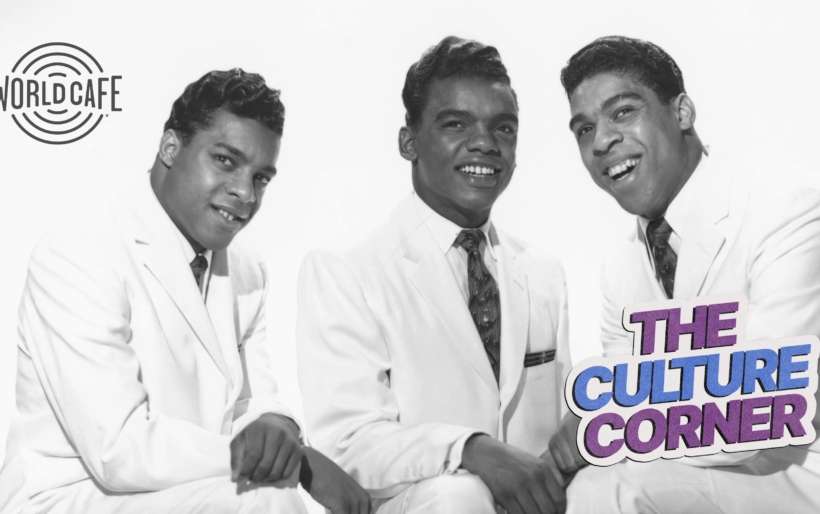
O’Kelly (from left), Ronald and Rudolph Isley, of The Isley Brothers, pose for a portrait circa 1962 in New York.
As Black History Month gets underway, World Cafe correspondent John Morrison is asking us to listen deeply.
“People of African descent — no matter where we are, wherever we’ve been — we’ve been in, culturally, this constant musical dialogue with one another,” he says.
Morrison, who is also the host of Culture Cipher Radio on WXPN here in Philadelphia, is launching a month-long series on the music of the African diaspora.
“ I want to start with a fundamental concept in African music and Black music everywhere: call and response,” he says.
Writer Kosiso Nwachukwu describes it as a “common melodic characteristic of African music where a performer known as the leader initiates a phrase (call) and the rest of the group responds with a complimentary phrase (response).”
Its roots stretch back to traditional African music, and in the United States, those techniques endured under the brutal constraints of slavery.
“The early forms of music, here in America, being made by black folks … it was primarily vocal music, because drumming was largely banned throughout most plantations in the United States,” Morrison says. “The call-and-response formula that was baked into this music didn’t just disappear with the legal abolition of slavery … It transferred over into new musical styles.”
Call and response became fundamental to African American musical styles, like the work song. Morrison points to one example recorded by folklorist Bruce Jackson in the 1960s at the Ellis Unit prison in Walker County, Texas.
“You hear the leader calling out the song and a chorus of men responding,” Morrison says. “This is all happening while the workers are hammering down — like you can hear the act of labor in their performance. The rhythm is in the voice, but it’s also in the work. It’s just a powerful example of how call and response was built into these work songs.”
As Black music styles flourished and diversified, call and response remained a cornerstone of many genres. Morrison says you can hear it in the blues, gospel music and rock and roll.
“Listen to The Isley Brothers‘ ‘Shout’ from 1959 — the entire song is basically multiple rounds of call and response,” he says.
Today, you hear it in the way hip-hop performers interact with crowds, or on chart-topping hits like Cardi B‘s “I Like It.” The reason the technique persists to this day goes beyond sound. Call and response acts like connective tissue.
“It creates this interactive dynamic,” Morrison says. “It breaks down this wall between the spectator and the performer, so it makes the music an experience that we all share in.”
Next week, Morrison will dive into the cultural exchange between different Black musical communities and how that exchange has been accelerated by recording technology.
This episode of World Cafe was produced and edited by Kimberly Junod. Our digital producer is Miguel Perez. World Cafe‘s engineer is Chris Williams. Our programming and booking coordinator is Chelsea Johnson and our line producer is Will Loftus.