
‘It’s a very Irish thing’: CMAT on why making country pop felt inevitable
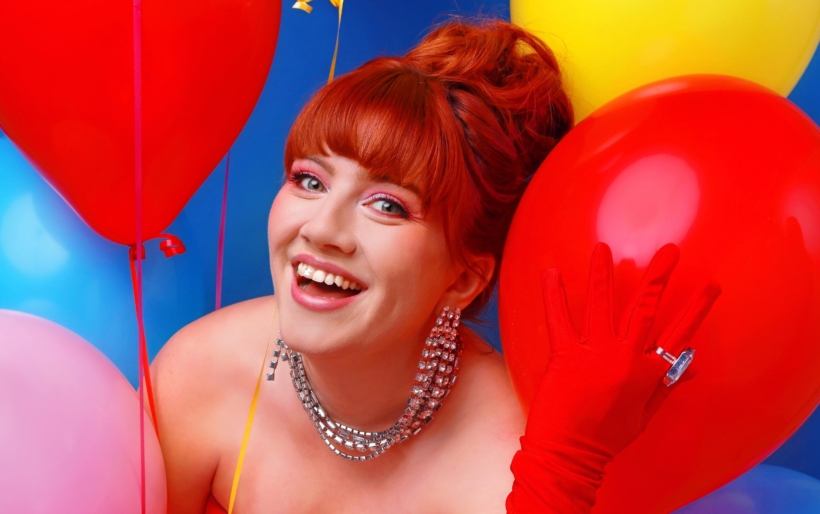
CMAT
One of the most talked-about new country artists right now isn’t from Nashville. She’s from a village outside Dublin.
CMAT, born Ciara Mary-Alice Thompson, grew up in Dunboyne, where there are “six pubs, two hairdressers and a petrol station,” she says.
Her formative years there run through the core of Euro-Country, her Mercury Prize-nominated album that’s been lauded by critics for its blend of classic country lyricism and keen pop instincts.
CMAT says she’s always been drawn to country music.
“Sadness is in the bones of country music,” she says. “In the bones of even the happiest country music is just, like, pure sadness and abject misery and confusion at the human condition. These are all the topics that occupy my brain the most … It’s a very Irish thing.”
Euro-Country‘s title track opens with CMAT singing in her “broken Irish,” a language she grew up speaking but has lost over time. Musically, the song starts without percussion, echoing traditional Irish music, before she shifts into English and a steady beat.
“I think it’s such an illustrative point,” she says. “I can’t speak Irish because, in order to have any kind of life for myself, I had to move to England. So my Irish is gone, and it’s not anywhere near as good as it used to be. That, in and of itself, is enough of a symbol of what we’re talking about in the whole album and in the whole song.”
In today’s session, CMAT explains why she wanted to weave together her sense of national identity and her own memories of Ireland on Euro-Country.
“When I think of my childhood, the thing I get to go back to is, like, Ireland’s economic crash,” she says. “It just got me thinking. I think it just ignited something in me where I was, like, ‘I don’t think anyone’s really made a record about that time in Ireland. I don’t think anyone’s really gone in on it, artistically.’ That’s as good a reason as any for me to make a record.”
Interview Highlights
On her early pop star aspirations
“I wasn’t encouraged at all. My family thought I was insane. My family thought I was mad. My mom is a nurse and my sister and my brother are nurses, and my other sister is a teacher. So pop star was not on the agenda…
“I think that was a bit of a bone of contention for my family. I think they really thought that I was going to go to university and get, like, a really good degree and become, like, a teacher or, like, a university lecturer or something, because I was quite good in school. I wish I knew why I did it. Like, I wish I knew why I started making music or why I started performing it live. But I can’t. I honestly can’t tell you. I just had to do it.”
On writing “I Wanna Be a Cowboy, Baby!”
“This is probably the most important song that I ever wrote, and I don’t know if anything will ever come close to it. I was living in Manchester with a boyfriend who I’d been with for years and years and years, and he was a terrible guy.
“We broke up, and he left the flat that we were living in, and I was alone in the flat for the first time in, like, a year … I guess it was, like, I realized that I had committed an act of pure freedom by getting out of the relationship, but now I was left with the remnants of that freedom, which is social isolation, because I was a woman and I can’t go out drinking by myself…
“The whole notion of a cowboy is someone who roams the plains and has pure freedom and can do whatever he pleases, but I don’t get that same privilege because it’s more dangerous for me because I was born a woman.”
On writing “Take a Sexy Picture of Me”
“Basically, as soon as I started being broadcast on television, immediately, I just attracted, like, the most vile comments about my physical appearance. It was basically as soon as I became famous, the only thing that 80% of the people on the internet felt the need to talk about was how much I weigh…
“I was genuinely very shocked by it. I thought if people were going to have an issue with something to do with me, that that would be pretty down low on the list. I thought that was not that important. But it turns out, if you’re a woman and you make music, there’s an expectation over what you look like and how you present yourself…
“I do think that the standard of beauty that is expected of women in entertainment is directly linked with a perceivable level of suffering. Like, I want this woman to look like she starves herself and works very hard on her appearance. I think there’s just loads of things in it, but ultimately, it’s to do with subjugation…
“There’s a lot of really tricky things going on with, I think, people’s very loud distaste for the way that I look, in the way that there often is when people really criticize someone’s appearance over and over again. There’s something deeper than just they don’t like the presentation. It’s that they don’t like what the presentation means. So the song came about because I just hate those people.”
This episode of World Cafe was produced and edited by Miguel Perez. Our senior producer is Kimberly Junod and our engineer is Chris Williams. Our programming and booking coordinator is Chelsea Johnson and our line producer is Will Loftus.