
On his latest album, William Prince writes his way back to Peguis First Nation
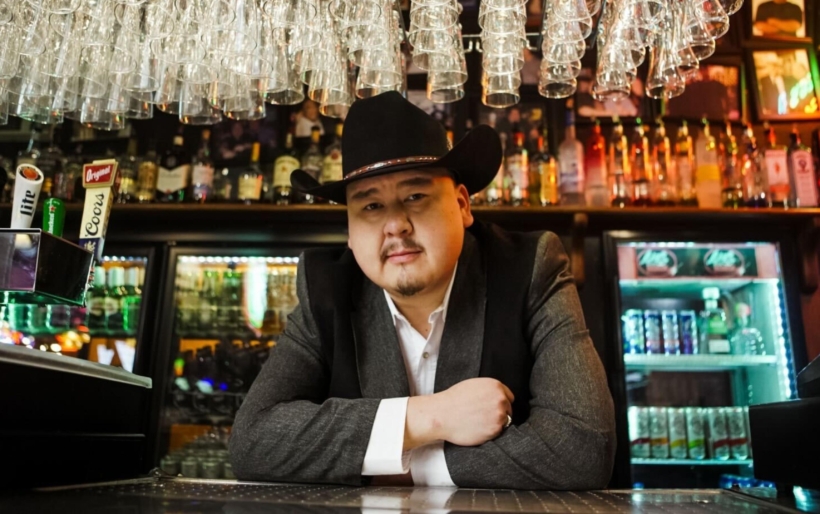
William Prince
For William Prince, leaving home was never the hard part. It’s been finding his way back.
The songwriter grew up in Peguis First Nation, a large First Nations community in Canada’s Manitoba province, and like many artists with big ambitions, Prince had to move away to build his career. Over the past decade, that decision has taken him from pawning his guitar to sharing stages with Willie Nelson and playing the Grand Ole Opry.
His latest album, Further from the Country, reflects that momentum. It is bolder than his earlier work, leaning into rock influences and a less traditional country sound.
In this session, Prince talks about making his latest album, and he looks back at where he came from, the people who shaped him and the complicated feelings that come with leaving home behind.
Interview Highlights
On leaving home
“Peguis First Nation is a beautiful place where I come from that I always found myself really working hard to belong there, in a funny way, because I moved there in Grade 5. Most of the family connections and friend connections start in preschool, so I was a number of years behind and feeling kind of out of place, when ironically the reserve itself is named after my grandfather, Chief Peguis.
“That line [in ‘Further from the Country’] about wanting to belong — I so want to prove and show and display my pride for this place that I’m from, but at the same time, the longer you spend away from that place, it feels less and less like home, in a way. People treat you different and look at you different because you’ve been out there doing different things, like anybody moving away from a small town…
“The truth is, I’m wanting more than ever to just be a resident of Peguis First Nation and display my home to the world, because that’s what this record is about.”
On bias and being a First Nations artist in country music
“Being a First Nations man, fear has been a part of my life my entire upbringing. I’ve been told to fear the challenger who might want to take down the 6-foot-3 guy that’s standing around at the bar just enjoying himself. I’ve been taught to be mindful of how I conduct myself everywhere. So fear was always a part — and is still a major part — of how Indigenous people and First Nations people walk through the world: fear of judgment, fear of not being given a fair shake.
“With music, I knew I would have to be 150% greatness just to be taken maybe as seriously as a lot of the other acts — the white acts — around me. … That’s kind of pre-programmed when you go anywhere as a large First Nations man. I decided to not let it define me…
“There’s this internal bias where people think, ‘This guy doesn’t look like the average country singer, so I’m going to reject it because it’s not the same.’ Falling to that has never been the plan. I wanted to be so good at writing songs and singing and performing … I just wanted the songs to speak for themselves.”
On his father’s influence and writing “The Charmer”
“It’s very reflective of [his] final days. He was sick a lot of the time — complications to diabetes; he had kidney failure; he had legs amputated; he was in a wheelchair. This is a man who worked hard all his life, drove himself everywhere and was suddenly stripped of all that and was constantly under heavy medication for dealing with pain and anti-rejection. He had no immune system a lot of the time, so this was combated by medication that would fog his mind.
“I’d say he was mostly himself, but I saw him becoming a weaker, older man in that time. His charming ways will always be the strongest memory — his laugh, his way of dealing with people and making you feel really heard. Even though you could say there are a lot of things about him — a lot of mistakes he made that hurt us — I still just see my hero in there…
“I don’t want to leave my son with this same memory — ‘Oh, my dad was angry. My dad was upset and flustered all the time’ — so I’m trying to keep the balance. I think of him all the time and every time I get up on stage, every time I get up and be a good dad, the charmer rides again. [That song is] very much an ode to my old man.”
This episode of World Cafe was produced and edited by Kimberly Junod. Our digital producer is Miguel Perez. World Cafe‘s engineer is Chris Williams. Our programming and booking coordinator is Chelsea Johnson and our line producer is Will Loftus.